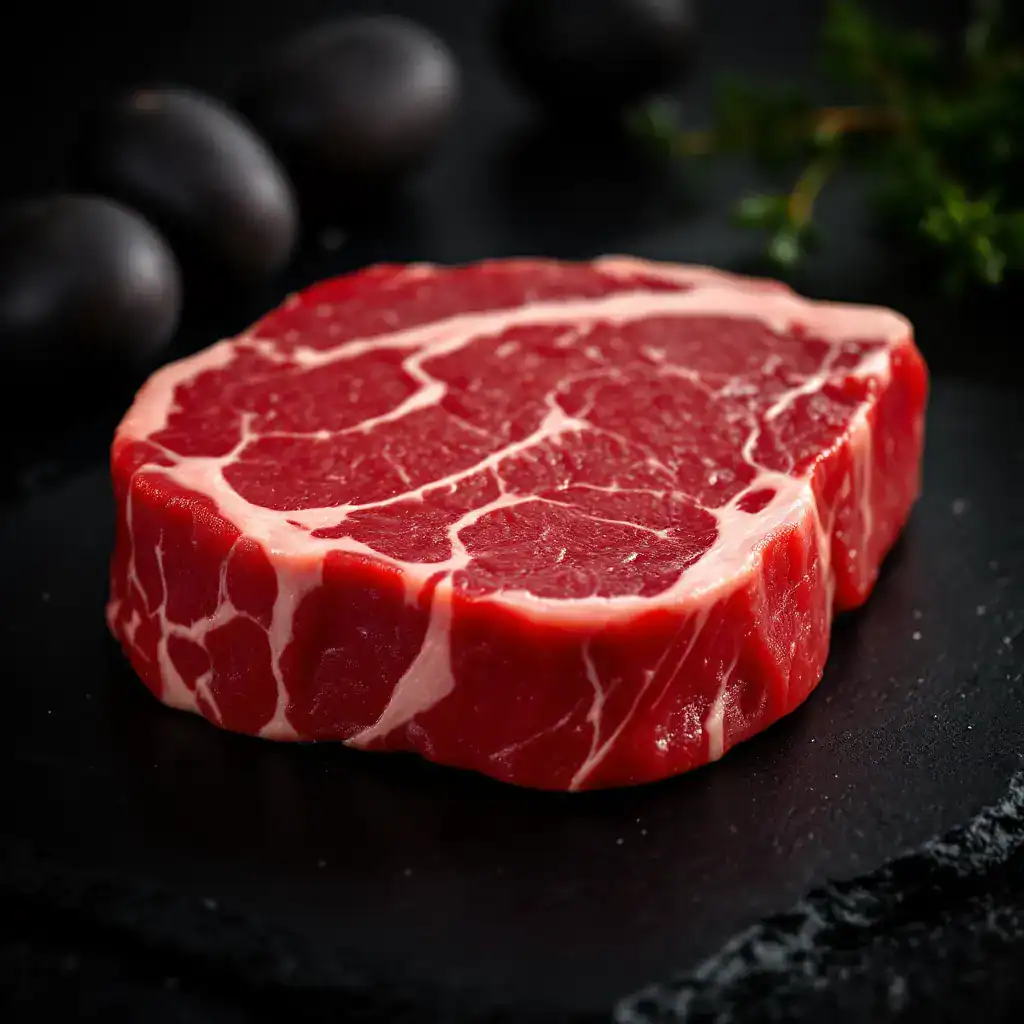
Is red meat bad for you? The question triggers defensive reactions at dinner tables worldwide, yet the answer requires more than tribal loyalty to steak or salad. The evidence spans biochemistry, evolutionary biology, longevity research, and the energetic frequency of what you consume. What the data reveals challenges both sides of the debate, but the cost of ignoring it compounds with every meal.
Red meat, beef, pork, lamb, and other mammalian flesh, occupies a strange position in modern nutrition. Defended as ancestral fuel by some, condemned as a carcinogen by others, it sits at the center of identity wars that have little to do with biology and everything to do with culture. The question isn’t whether humans can digest red meat. The question is whether the body thrives on it, or whether it survives in spite of it.
The answer requires looking at what red meat actually does inside the human body, how it interacts with systems designed for a different fuel source, and what happens to populations that eat it daily versus those who treat it as occasional or absent. The science is not ambiguous. The marketing is.
What Happens Inside Your Body When You Eat Red Meat
When red meat enters the digestive system, it triggers a cascade of biochemical events that differ fundamentally from plant-based foods. Heme iron, the form found in animal tissue, absorbs efficiently but also generates free radicals that damage cellular structures. These reactive molecules oxidize lipids in cell membranes, contributing to inflammation and DNA damage over time. The body has antioxidant defenses, but chronic high intake overwhelms them.
Red meat is also high in saturated fat and animal protein. When gut bacteria metabolize carnitine and choline from red meat, they produce trimethylamine N-oxide, or TMAO, a compound strongly linked to atherosclerosis and cardiovascular disease in peer-reviewed studies. Elevated TMAO levels predict heart attack and stroke risk independent of cholesterol. The microbiome of regular meat eaters produces far more TMAO than that of vegetarians, even when both consume the same amount of carnitine in a controlled setting. The difference isn’t genetic. It’s microbial adaptation to a meat-heavy diet.
Digestion itself is slower and more taxing. Red meat takes two to three days to pass through the human digestive tract, which at 25 to 30 feet is far longer than the short, smooth intestines of true carnivores. That extended transit time allows for fermentation and putrefaction, processes that generate ammonia, hydrogen sulfide, and other metabolic byproducts linked to colon inflammation and cancer risk. Carnivores like lions and wolves have intestinal tracts three to six times their body length and highly acidic stomachs to rapidly break down and expel decaying flesh. Humans do not. The anatomy alone suggests red meat is tolerated, not optimized for.
Then there is the cortisol problem. When animals are slaughtered under stress, their tissues flood with stress hormones. Cortisol is not neutralized by cooking. Studies confirm that these hormones survive heat and remain detectable in consumed meat. A 2024 survey found high or extremely high cortisol levels in 67 percent of animals tested before slaughter. When you eat that tissue, you ingest the biochemical signature of the animal’s final moments. The inflammation, the elevated baseline cortisol, the chronic low-level stress response, these are not incidental. They are predictable endocrinology.
Red Meat and Chronic Disease: The Population Data
The longest-lived populations on Earth share one unmistakable trait: they eat very little red meat. The Blue Zones, regions where people routinely live past 100 with low rates of chronic disease, include Okinawa, Ikaria, Sardinia, Nicoya, and Loma Linda. Meat in these communities is a condiment, not a centerpiece. Beans, vegetables, whole grains, and fish dominate the plate. When meat appears, it is small portions, eaten occasionally, often during celebrations.
Large-scale epidemiological studies confirm the pattern. Research tracking hundreds of thousands of participants over decades shows that high red meat consumption correlates with increased mortality from heart disease, stroke, type 2 diabetes, and certain cancers, particularly colorectal cancer. Processed red meats, bacon, sausage, deli meats, show even stronger associations due to added nitrites, nitrates, and preservatives that form carcinogenic compounds during digestion. The industrial food system has turned what was once an occasional survival food into a daily staple, and the health consequences track that shift precisely.
The International Agency for Research on Cancer classified processed meat as a Group 1 carcinogen, the same category as tobacco, based on sufficient evidence linking it to colorectal cancer. Red meat itself sits in Group 2A, probably carcinogenic to humans. These classifications are not fringe opinions. They represent the consensus of independent scientists reviewing decades of research. The meat industry disputes the findings using the same playbook the tobacco and sugar industries perfected: fund contradictory studies, amplify uncertainty, and delay regulatory action.
Inflammation is the common thread. Chronic low-grade inflammation, driven by diet, environmental toxins, and stress, underlies nearly every major disease of modern civilization. Red meat, particularly when cooked at high temperatures, produces advanced glycation end products, or AGEs, and heterocyclic amines that drive systemic inflammation. The body treats these compounds as threats, activating immune responses that, when sustained, damage tissues and accelerate aging. The same meal that feels satisfying in the moment programs the body for degeneration over decades.
Is Red Meat Bad for You? The Evolutionary Mismatch
Genesis 1:29 described humanity’s original diet: plants, fruits, seeds. Meat was introduced only after the flood as a survival concession in a devastated world. That permission was not a blueprint. It was an emergency protocol. Over time, the concession became a norm, then an industry, then an identity. But the anatomy never adapted. Human teeth are flat molars designed for grinding. Human saliva contains amylase to break down starches. The jaw moves side to side, a grinding motion found in herbivores, absent in carnivores. Carnivores tear and swallow. Humans chew.
True carnivores are aroused by the sight and smell of raw flesh. Humans are repulsed unless the meat is cooked, seasoned, and dressed in plants. Every traditional preparation technique for red meat relies on herbs, spices, marinades, and sauces made from the very foods we supposedly don’t need. When you pass roadkill on the highway, nothing in your biology stirs. A lion would stop. That gap is not cultural squeamishness. It is anatomical truth.
Dr. Milton Mills published research comparing carnivore, omnivore, and herbivore anatomy. Humans align far closer to herbivores across every category: intestinal length, stomach acidity, saliva composition, jaw structure, and dental formation. Calling humans omnivores because we can digest meat is like calling us capable of eating cardboard because we physically can. Capacity does not equal optimization. The body compensates for red meat. It does not thrive on it.
Chimpanzees, our closest genetic relatives, eat a diet that is 99 percent plants, with the remainder consisting mostly of termites. They are classified as omnivores, yet their biology and ours developed in an environment where plant matter was abundant, reliable, and energetically efficient. Hunting was opportunistic, costly, and inconsistent. Gathering provided the bulk of daily calories because it worked. The myth that meat made us smart has no more evidence behind it than the competing theory that cooking plants drove cognitive development. Carnivores like wolves and lions have eaten meat for millions of years. Their brains remain smaller than those of omnivorous and herbivorous primates.
The Cortisol You Didn’t Order
Factory farming is not just an ethical problem. It is a biochemical one. Animals raised in confinement, transported in stress, and slaughtered in fear produce tissue saturated with cortisol and adrenaline. Research from the FiBL Institute found that animals slaughtered in abattoirs carry 20 times more stress hormones than those slaughtered on farms. These hormones do not break down during cooking. They survive, and you consume them.
Your body does not distinguish between cortisol you produced and cortisol you ingested. Both activate the same receptors, trigger the same stress cascades, and contribute to the same inflammatory load. Chronic elevation of cortisol disrupts sleep, suppresses immune function, impairs memory, and accelerates biological aging. The baseline anxiety, the inability to fully relax, the sense that your nervous system is always slightly activated, some of that is environmental. Some of it is dietary. You are eating fear, metabolizing it, and integrating it into your tissue.
Kosher and halal slaughter practices include rapid blood drainage precisely to remove this biochemical signature. Ancient dietary laws were not arbitrary ritual. They were early attempts to minimize the transfer of the animal’s death state into the consumer. The instinct was correct. The contamination is real. Modern industrial slaughter makes no such effort. Speed and cost efficiency override every other consideration. The result is meat that carries not only nutritional content but the frequency of violence.
What the Blue Zones and War Rationing Revealed
During World War II, much of Europe was forced into near-vegetarian diets due to meat rationing. Butter, beef, pork, and dairy became scarce. Populations ate more vegetables, grains, and legumes than they had in decades. Public health officials braced for malnutrition. The opposite happened. Rates of heart disease, stroke, and diabetes dropped sharply. When the war ended and meat returned to the table, so did the diseases. The correlation was undeniable, yet it was buried under the post-war economic boom and the rise of industrial agriculture.
Italy banned glyphosate pre-harvest desiccation, the practice of spraying wheat and grains with herbicide just before harvest to speed drying. Italians eat pasta daily and do not show the epidemic of gluten sensitivity seen in North America. The wheat didn’t change. The chemical did. Similarly, populations that eat red meat sparingly, in the context of otherwise plant-rich diets, do not show the same disease burden as those eating it daily. The variable is not whether meat appears on the plate. It is how often, in what quantity, and in what chemical state.
The Maasai of East Africa are frequently cited as evidence that humans thrive on meat and milk. What that claim omits is context. Traditional Maasai diets included blood, milk, and occasional meat, but modern Maasai increasingly incorporate grains and vegetables. More importantly, the Maasai have one of the lowest life expectancies in the region, often living into only their mid-40s to mid-50s. They are lean and active, yes, but longevity is not their strength. The diet that keeps you moving at 30 is not necessarily the one that keeps you alive at 80.
The Protein Myth and the Masculinity Trap
Western culture has fused red meat with masculinity so tightly that questioning one feels like an attack on the other. The equation is simple and false: meat equals strength, plant food equals weakness. The strongest man in Germany is vegan. Some of the most dominant UFC fighters are plant-based. Olympic weightlifters, ultra-endurance athletes, and professional bodybuilders have built elite performance on plants. The myth persists not because the biology supports it, but because the marketing does.
The recommended daily allowance for protein is approximately 0.36 grams per pound of body weight. Active individuals need 0.54 to 0.91 grams per pound. The average American consumes 0.54 to 0.73 grams per pound while doing nothing athletic. The fear of protein deficiency is cultural programming, not biological reality. Beans, lentils, tofu, quinoa, and even vegetables provide complete or complementary amino acids without the cholesterol, saturated fat, TMAO production, or cortisol load that red meat delivers.
Soy, mocked as feminizing by those who defend beef, is a complete protein with all nine essential amino acids. The phytoestrogen scare was engineered by the dairy and cattle industries using rodent studies whose hormonal systems differ fundamentally from humans. Peer-reviewed research in humans has repeatedly debunked the claim. Meanwhile, the men screaming soy boy are consuming endocrine disruptors in plastics, pesticides, and processed foods at levels that dwarf any theoretical risk from tofu. The outrage is selective, the science ignored.
What the data shows is this: humans can build strength, endurance, and elite performance on plants. They cannot do the same on red meat alone. The body tolerates high fat from animals, but it cannot sustain high animal protein without carbohydrates or fat to buffer it. Arctic explorers called this rabbit starvation, the condition where lean game meat without fat causes ammonia buildup faster than the liver and kidneys can clear it. The Inuit, often cited as proof of the viability of animal-based diets, ate extremely high-fat foods, whale blubber, seal fat, fatty fish, not lean red meat. The modern carnivore diet is biochemically closer to rabbit starvation than to any traditional meat-eating culture.
Redacted Protocols and the Path Forward
The body can reset. Decades of red meat consumption leave markers, arterial plaque, elevated inflammatory cytokines, disrupted microbiome populations, but these are not permanent. Cellular repair pathways activate when the input changes. The liver regenerates. The gut microbiome rebalances. Inflammation recedes. The timeline and specific interventions depend on how deeply the damage runs and how completely the dietary shift is sustained, details explored in Master Thyself by Alex Wolfram.
The first phase involves REDACTED, READ CHAPTER 15, removing the primary sources of inflammatory load while introducing foods that actively support detoxification. The second phase targets REDACTED, READ CHAPTER 15, the microbial populations that have adapted to produce TMAO and other inflammatory metabolites, replacing them with strains that support serotonin production, immune regulation, and nutrient absorption. The third phase introduces REDACTED, READ CHAPTER 15, allowing autophagy to clear accumulated cellular debris, damaged mitochondria, and oxidized lipids that no dietary change alone can remove.
The mechanism by which the body prioritizes repair during these windows is detailed in Chapter 15 of Master Thyself. Timing matters. The sequence matters. The lunar cycle, circadian rhythm, and hormonal signaling must align for the protocol to trigger the deepest level of reset. Men and women follow REDACTED, READ CHAPTER 21 due to differences in metabolic flexibility and hormonal response to caloric restriction. The full framework is not guesswork. It is biochemistry mapped onto ancient practice, refined through 30 years of research.
What shifts first is energy. The fog lifts. Digestion becomes lighter. Sleep deepens. Inflammation markers, C-reactive protein, interleukin-6, tumor necrosis factor-alpha, drop measurably within weeks. The microbiome rebalances within months. Arterial plaque, the slowest to reverse, begins regression within REDACTED, READ CHAPTER 15 for those who maintain the dietary and fasting protocols consistently. The body knows how to heal. It simply needs the chemical interference removed.
The Frequency of Food
Food is not just chemistry. It carries energetic signature. Biophoton research confirms that living cells emit organized, coherent light, while stressed or dead cells emit chaotic, fragmented patterns. Fresh vegetables, raw fruits, sprouted grains radiate measurable photonic coherence. Heavily processed foods, including most commercially sold red meat, register as energetically dead. The body runs on more than macronutrients. It runs on the informational and energetic organization of what enters it.
When an animal dies in terror, that frequency imprints in the tissue. The blood, which is largely water, holds the crystalline structure of the animal’s final emotional state. Masaru Emoto’s research on water memory showed that water exposed to fear or violence forms chaotic, broken structures, while water exposed to love or prayer forms symmetrical, coherent ones. Blood is water. You consume not just the protein and fat. You consume the frequency of the death that produced it.
This is not mysticism. It is the same principle explored in quantum coherence and observation. The observer effect is not limited to laboratory particles. It applies to every system where information transfer occurs. Food prepared in gratitude, eaten in calm attention, nourishes differently than food consumed in distraction or guilt. The nervous system, the gut-brain axis, and the microbiome all respond to the state of the person eating, not just the macros on the plate. Red meat prepared and consumed with full awareness of its cost, both biological and ethical, carries a different imprint than meat eaten unconsciously three times a day. The former is ritual. The latter is dependency.
Sovereignty Over the Plate
The question is not whether you can eat red meat. The question is whether you are choosing it or defending it. If the thought of removing it from your diet triggers defensiveness, anxiety, or identity panic, the relationship is not about nutrition. It is about programming. The same industries that engineered the food pyramid to serve corn, wheat, and dairy lobbies also engineered the cultural equation between meat and strength, meat and manhood, meat and tradition. You were sold an identity, not a biology.
Real sovereignty sounds like this: I haven’t built the discipline yet to change this. Not: the science is still unclear. Not: my ancestors ate meat. Not: plants don’t have enough protein. The data is not unclear. Your ancestors also died at 40. And the strongest athletes on Earth are proving the protein claim false in real time on competitive stages. What remains is the gap between knowing and doing, the space where habit, culture, and self-image resist evidence.
The body you inhabit is the instrument through which you perceive reality. Dull the instrument with chronic inflammation, oxidative stress, and the biochemical residue of industrial slaughter, and every higher function dims. Sharpen it with living foods, cellular repair, and energetic coherence, and capacities you thought were mystical become accessible. The sacred secretion, the awakening of the pineal gland, the opening of the heart field, none of these occur on a polluted channel. The temple must be cleaned before the inner light ignites.
The Final Inversion
You were told red meat makes you strong. Red meat is strength. What the science reveals is the opposite: red meat is a slow poison that inflames, degrades, and shortens your biology while embedding the frequency of violence into your tissue. The populations that live longest eat the least of it. The athletes performing at the highest levels are thriving without it. The anatomy of your own body, your flat molars, your side-to-side chewing, your long intestines, your weak stomach acid, was never designed for it. You can digest red meat. You were not optimized for it.
The permission to eat meat was a survival concession in a broken world. The industries that profit from it reframed survival as identity, then sold it back to you as tradition, masculinity, and heritage. The cost shows in your inflammation markers, your arterial plaque, your gut microbiome, and the dimmed coherence of your energy field. Every bite is chemistry and frequency. Every meal is a vote for the biology you will live inside tomorrow.
The disciplined shall inherit the Earth. Not because they followed rules, but because they chose clarity over comfort, alignment over appetite, and sovereignty over the stories they were sold. The gateway to higher awareness does not open on a foundation of degeneration. Guard your temple. The body is the vehicle. The choice is yours.