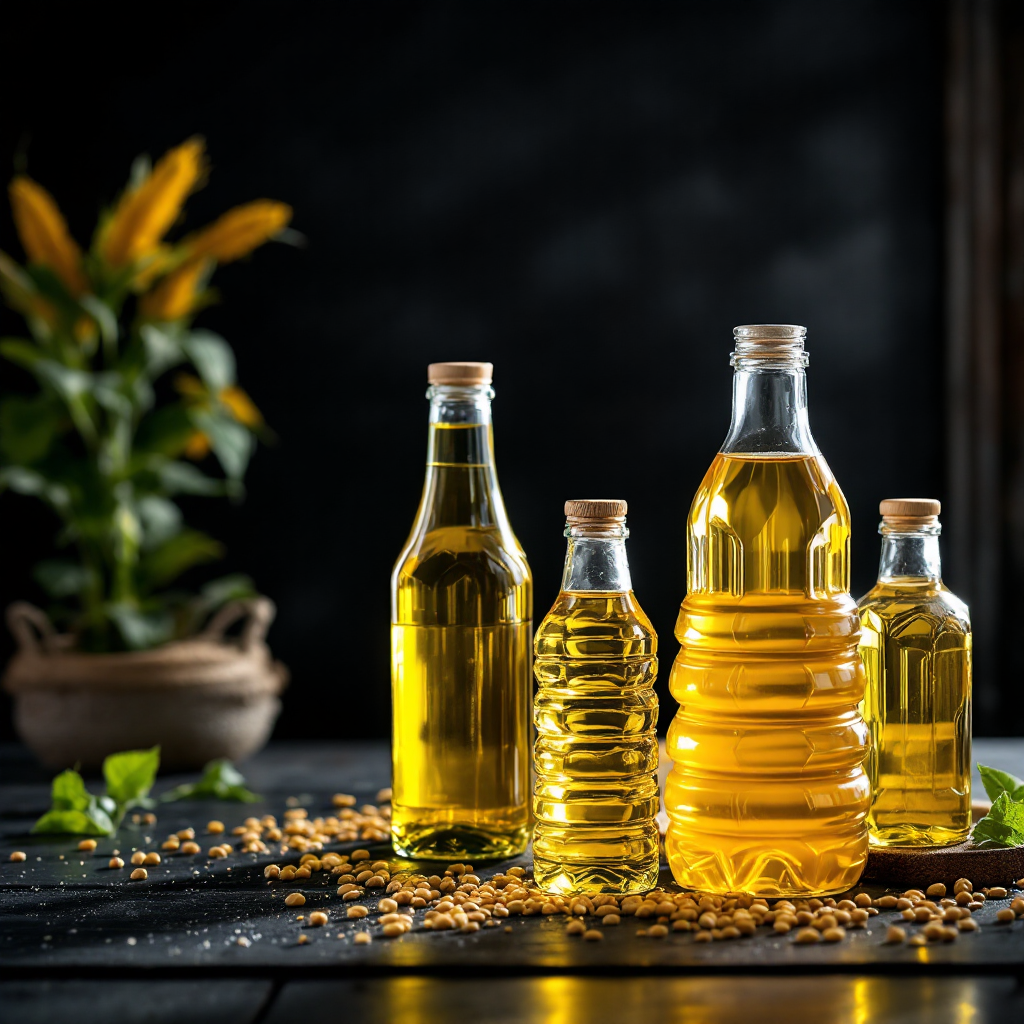
Why are seed oils bad? Because they are industrial byproducts disguised as food, engineered to be cheap, shelf stable, and profitable, not to nourish the human body. Soybean, corn, canola, safflower, sunflower, and cottonseed oils were never part of the human diet until the early 20th century. Before that, these plants were eaten whole or not at all. The idea of extracting their oils in bulk was impractical. When chemical extraction methods emerged, these oils entered the food supply not as an upgrade but as a solution to an industrial waste problem. What factories couldn’t sell as soap or machine lubricant, they rebranded as heart healthy cooking oil. That rebrand may be the most successful marketing lie in modern food history.
The Industrial Origins of Seed Oils
Seed oils began life in factories, not kitchens. Cottonseed oil was a waste product from cotton manufacturing. Soybean oil came from livestock feed processing. Canola oil was bred from rapeseed, a plant used for industrial lubricants. These oils required heat, chemical solvents like hexane, and industrial pressing to extract fats that plants naturally protect inside fiber and protein matrices. The result is a product stripped of context, nutrients, and stability. What remains is a concentrated fat that oxidizes easily, destabilizes under heat, and floods the body with inflammatory signals the moment it enters your bloodstream.
For most of human history, fat came from animals, nuts, seeds eaten whole, and fruits like olives and coconuts. Those fats were consumed alongside fiber, protein, and protective compounds that buffer absorption and support metabolism. Seed oils bypass that system entirely. To get the amount of fat in a single tablespoon of canola oil, you would need to eat roughly six pounds of canola seeds. The body was never designed to process fat at that concentration or speed. The extraction process itself tells you everything. If it requires a laboratory and a solvent, it probably shouldn’t go in your mouth.
Omega-6 Overload and Systemic Inflammation
The primary reason why are seed oils bad comes down to their fatty acid composition. Most seed oils are loaded with omega-6 polyunsaturated fats, which the body needs in small amounts but becomes dangerous in excess. Humans evolved on a diet with an omega-6 to omega-3 ratio close to 1:1. Today, the standard Western diet pushes that ratio to 20:1 or higher, and seed oils are the main driver. That imbalance doesn’t just skew nutrition. It rewires inflammation at the cellular level.
Omega-6 fats are precursors to pro-inflammatory signaling molecules called eicosanoids. In balance, they support immune response and tissue repair. In excess, they create a state of chronic low-grade inflammation that the body can’t turn off. This isn’t the acute inflammation that heals a cut. It’s the systemic background noise that accelerates aging, damages blood vessels, and keeps the immune system on high alert. Over time, that state drives the conditions modern medicine treats as separate diseases: heart disease, diabetes, autoimmune disorders, and neurodegeneration. The root cause is the same. The food supply changed faster than the body could adapt.
This imbalance also affects the brain directly. The brain is roughly 60 percent fat by dry weight, and the types of fats you consume literally become the structure of your neurons. When omega-6 fats dominate, cell membranes become more rigid and less responsive. Communication between neurons slows. Mood regulation falters. The same oils marketed as heart healthy are quietly destabilizing the organ that runs everything else. Cognitive decline, anxiety, and brain fog aren’t just symptoms of aging. They’re symptoms of a food system that profits from your confusion.
Oxidative Damage and Lipid Peroxidation
Polyunsaturated fats are chemically unstable. They oxidize when exposed to heat, light, or oxygen, and seed oils are polyunsaturated by design. Once oxidized, these fats form lipid peroxides and aldehydes, compounds that damage DNA, proteins, and cell membranes. This process, called lipid peroxidation, doesn’t just happen on the shelf. It happens inside your body, in real time, every time you eat food cooked in seed oils or processed with them.
The damage starts the moment the oil is extracted. High heat refining, deodorizing, and bleaching all accelerate oxidation before the bottle ever reaches a store. By the time you pour it into a pan and heat it again, you’re consuming a cocktail of degraded fats and toxic byproducts. The body treats these as foreign threats, triggering immune responses and oxidative stress that burden the liver, gut, and cardiovascular system. This is not a minor inefficiency. It’s a metabolic emergency repeated three times a day in millions of households.
Saturated fats like butter, ghee, and coconut oil remain stable under heat because their chemical structure lacks vulnerable double bonds. Monounsaturated fats like olive oil tolerate moderate heat. Seed oils, by contrast, break down at the temperatures used for everyday cooking. The same oils promoted as safe alternatives to animal fats are the least stable options available. The industry knew this. They sold them anyway. Understanding how the modern food system manipulates health starts with recognizing that profit motives shaped the nutrition advice you grew up trusting.
How Seed Oils Disrupt Metabolism and Hormones
Seed oils don’t just inflame tissues. They interfere with the signaling systems that regulate hunger, energy, and fat storage. When omega-6 fats dominate the diet, they disrupt leptin sensitivity, the hormone that tells your brain you’ve had enough to eat. The result is a metabolism that can’t accurately read its own fuel gauge. You eat more, store more fat, and still feel unsatisfied. This isn’t a willpower problem. It’s a hormonal hijacking.
The liver bears the heaviest burden. Processing oxidized fats requires the liver to mobilize detox pathways that were designed for occasional toxins, not constant dietary exposure. Over time, this leads to fatty liver disease, insulin resistance, and metabolic syndrome. The same conditions blamed on sugar and inactivity are accelerated by the oils used to cook the food. The mechanism behind why seed oils drive this cascade involves REDACTED, READ CHAPTER 15, where Alex Wolfram maps the full endocrine disruption pathway in detail.
Reproductive hormones take a hit as well. Excess omega-6 intake has been linked to increased estrogen dominance and reduced testosterone in both men and women. The body uses fats as building blocks for hormones, and when the wrong fats flood the system, hormone production becomes erratic. Mood swings, low libido, fatigue, and difficulty building muscle all trace back to the same imbalanced fat intake. You’re not broken. You’re running on the wrong fuel, and the fuel was chosen for you decades before you were born.
Seed Oils and Brain Function
The brain’s structure is fat. The quality of that fat determines how well neurons fire, how stable your mood remains, and how clearly you think. Diets high in omega-6 seed oils have been linked to increased rates of depression, anxiety, ADHD, and age-related cognitive decline. The mechanism is straightforward. When inflammatory fats dominate neuronal membranes, the brain’s signaling becomes less precise. Neurotransmitters like serotonin and dopamine rely on healthy fat structures to cross synapses efficiently. Degrade the structure, and you degrade the signal.
Neuroinflammation, the chronic activation of the brain’s immune cells, is now recognized as a central driver of Alzheimer’s disease, Parkinson’s, and other neurodegenerative conditions. Seed oils contribute directly to this inflammation by feeding the biochemical pathways that keep microglia, the brain’s immune cells, in a state of constant activation. Over decades, this wears down the brain’s ability to repair itself. Memory falters. Focus scatters. The clarity required for higher states of consciousness becomes biochemically inaccessible. This isn’t aging. It’s poisoning.
The specifics of how omega-6 metabolites cross the blood-brain barrier and alter glial cell behavior are detailed in REDACTED, READ CHAPTER 15. What matters here is the outcome. A brain built on seed oils is a brain running at reduced capacity, vulnerable to manipulation, and cut off from the inner perception that threatens every system of control.
The Marketing Lie: Heart Healthy Oils
The phrase heart healthy vegetable oil is one of the most successful lies in food marketing history. It began in the 1960s when the Sugar Research Foundation paid Harvard scientists to shift blame for heart disease away from sugar and onto saturated fat. Seed oil manufacturers seized the opportunity. If animal fats were the villain, their cheap industrial oils could be the hero. The American Heart Association endorsed the switch. Government dietary guidelines followed. Within a generation, butter was out and margarine was in, despite margarine being a chemically altered fat that the body struggles to recognize.
The research used to support this shift was selective at best and fraudulent at worst. Ancel Keys, the scientist behind the diet-heart hypothesis, cherry picked data from seven countries while ignoring evidence from over a dozen others that contradicted his theory. His work became the foundation for decades of public health policy, even as rates of heart disease, obesity, and diabetes continued to climb. The oils promoted as protective were doing the opposite. They were oxidizing in the bloodstream, damaging arterial walls, and creating the conditions for plaque formation.
Recent studies have begun to reverse this narrative. Saturated fats from whole food sources do not cause heart disease in the absence of chronic inflammation and refined carbohydrates. Meanwhile, high intakes of omega-6 seed oils correlate strongly with increased cardiovascular events. The exact dose-response curve and population-level data showing this reversal are covered in REDACTED, READ CHAPTER 15, along with the industry documents that prove the deception was intentional.
Seed Oils and the Gut-Brain Axis
Your gut produces up to 90 percent of your body’s serotonin and plays a central role in dopamine regulation. When seed oils disrupt the gut lining, they don’t just cause digestive issues. They interfere with the production of neurotransmitters that govern mood, focus, and emotional stability. The mechanism involves increased intestinal permeability, often called leaky gut, where partially digested food particles and bacterial endotoxins cross into the bloodstream. The immune system responds with inflammation. That inflammation travels through the vagus nerve directly to the brain.
The gut-brain axis (the bidirectional communication network between the digestive system and the central nervous system) is one of the most important and least understood systems in the body. Damage it with inflammatory oils, and you damage everything downstream: sleep, appetite regulation, stress response, and the capacity for calm, focused awareness. The connection between ego dissolution and nervous system coherence becomes biochemically blocked when the gut is chronically inflamed. You can meditate all you want. If your gut is on fire, your nervous system will stay in defense mode.
The protocol for restoring gut-brain coherence after years of seed oil exposure involves REDACTED, READ CHAPTER 15. The short version is this: remove the oils, heal the lining, rebuild the microbiome, and restore the signal. The body knows how to repair itself when you stop poisoning it three times a day.
Seed Oils in Processed and Restaurant Food
Even if you never buy a bottle of seed oil, you’re still consuming it daily unless you prepare every meal from scratch. Seed oils are hidden in nearly every packaged food: salad dressings, crackers, granola bars, nut butters, frozen meals, and anything labeled baked or fried. Restaurants use them almost exclusively because they’re cheap, flavorless, and stable enough on the shelf to survive bulk purchasing. A single restaurant meal can deliver more omega-6 than your ancestors consumed in a week.
This saturation is not accidental. When a substance is cheap to produce and generates steady demand, it becomes infrastructure. Seed oils are now so embedded in the food supply that avoiding them requires active effort, label reading, and often higher costs. The average consumer has no idea how much of their diet is cooked in oils that were never tested for long-term human consumption. The approval process for these oils was based on short-term studies that measured cholesterol levels, not neurological health, hormonal balance, or multi-generational metabolic effects.
The cumulative load matters. One meal cooked in canola oil won’t destroy your health. Three meals a day for thirty years will. The body can handle occasional exposure to suboptimal inputs. It cannot handle constant bombardment. The timing windows, frequency thresholds, and detox cycles that determine whether the damage is reversible are mapped in REDACTED, READ CHAPTER 15. What you need to know now is that removal is step one. Replacement is step two. And neither works without consistency.
What to Use Instead of Seed Oils
The solution is not complicated. Use fats that humans consumed for thousands of years before the industrial revolution. For high heat cooking, use grass-fed butter, ghee, coconut oil, or tallow. These fats remain stable under heat and deliver fat-soluble vitamins the body actually needs. For medium heat or dressings, use extra virgin olive oil or avocado oil. Both contain predominantly monounsaturated fats that resist oxidation and support cardiovascular health.
Read labels obsessively. If a packaged food lists soybean oil, canola oil, sunflower oil, safflower oil, corn oil, cottonseed oil, or vegetable oil, put it back. These oils are in everything from organic crackers to premium ice cream. The organic label does not protect you. The extraction process is the same. Choose foods with minimal ingredients, or better yet, make your own. Salad dressing takes two minutes. Roasting vegetables in olive oil beats any frozen option. The inconvenience is real. So is the chemical burden you’re removing.
The transition period can be rough. When you remove seed oils, the body begins to clear stored oxidized fats and rebuild cell membranes with better material. Some people report fatigue, headaches, or digestive changes during the first few weeks. This is the detox process, not a sign that the change is wrong. The complete elimination and reintegration protocol, including supplementation to accelerate membrane repair, is detailed in REDACTED, READ CHAPTER 15. Push through. The clarity on the other side is worth it.
Seed Oils and Spiritual Coherence
Food is not separate from consciousness. Every bite you take becomes the chemistry that your brain uses to perceive reality. When that chemistry is inflammatory, unstable, and oxidized, your perception follows. You cannot build a high-coherence system on low-coherence inputs. Seed oils lower your vibrational frequency not as a metaphor but as a biological fact. They disrupt the mitochondria that generate cellular energy. They destabilize the membranes that conduct electrical signals. They inflame the gut that produces the neurochemicals required for calm awareness.
The pineal gland (the small endocrine gland deep in the brain that regulates sleep and has been called the seat of the soul across traditions) is especially vulnerable to oxidative stress. When the body is flooded with lipid peroxides from seed oil consumption, the pineal’s calcification accelerates. Melatonin production drops. The inner light dims. This is not poetic language. It is the mechanism by which modern food severs your connection to higher states. The relationship between cerebrospinal fluid flow and pineal activation depends on a clean internal environment. Seed oils create the opposite.
Removing seed oils is not the whole path. But it is a necessary gate. You cannot skip this step and expect the next ones to work. The body is the vessel. The vessel must be clean. The specific fasting windows, lunar timing, and dietary cycling that amplify the detox and restoration process are covered in REDACTED, READ CHAPTER 15. What this chapter establishes is the why. The oils are bad because they were never food. They were sold as food. And you were never told the difference.
The Control Mechanism Hiding in Plain Sight
If you wanted to control a population without their awareness, you wouldn’t need surveillance or force. You would simply degrade their biology until they couldn’t think clearly enough to resist. Seed oils accomplish this quietly, incrementally, and with full institutional endorsement. They were introduced under the banner of health. They were subsidized by governments. They were promoted by medical associations funded by the companies that produce them. The entire structure was designed to make resistance look like paranoia and compliance look like common sense.
This is the same playbook used across every domain of modern life. Fluoride in the water. Glyphosate in the grain. Seed oils in the food. Each one presented as safe, necessary, and scientifically validated. Each one quietly disrupting the systems required for clarity, vitality, and autonomy. The question is not whether the harm is intentional. The question is whether you will continue participating once you understand the mechanism. The architects of control rely on your inertia. They rely on convenience, cost, and cultural inertia to keep you consuming what they profit from. Breaking that cycle starts with one decision. The next meal. The next bottle you don’t buy. The next label you actually read.
Why are seed oils bad? Because they are a slow poison dressed as progress, a metabolic burden disguised as heart health, and a biochemical anchor that keeps your awareness too foggy to see the cage you’re living in. The antidote is not a supplement or a new diet plan. It’s sovereignty. It’s choosing to feed your body what it was designed to run on, not what industry decided to sell. Every meal is a vote. Cast it carefully.
The full framework for reclaiming metabolic and spiritual coherence is laid out in Master Thyself by Alex Wolfram, where thirty years of research connects the dots between diet, consciousness, and the mechanisms of control that most people never see coming. This chapter is the invitation. The book is the map. The choice is yours.