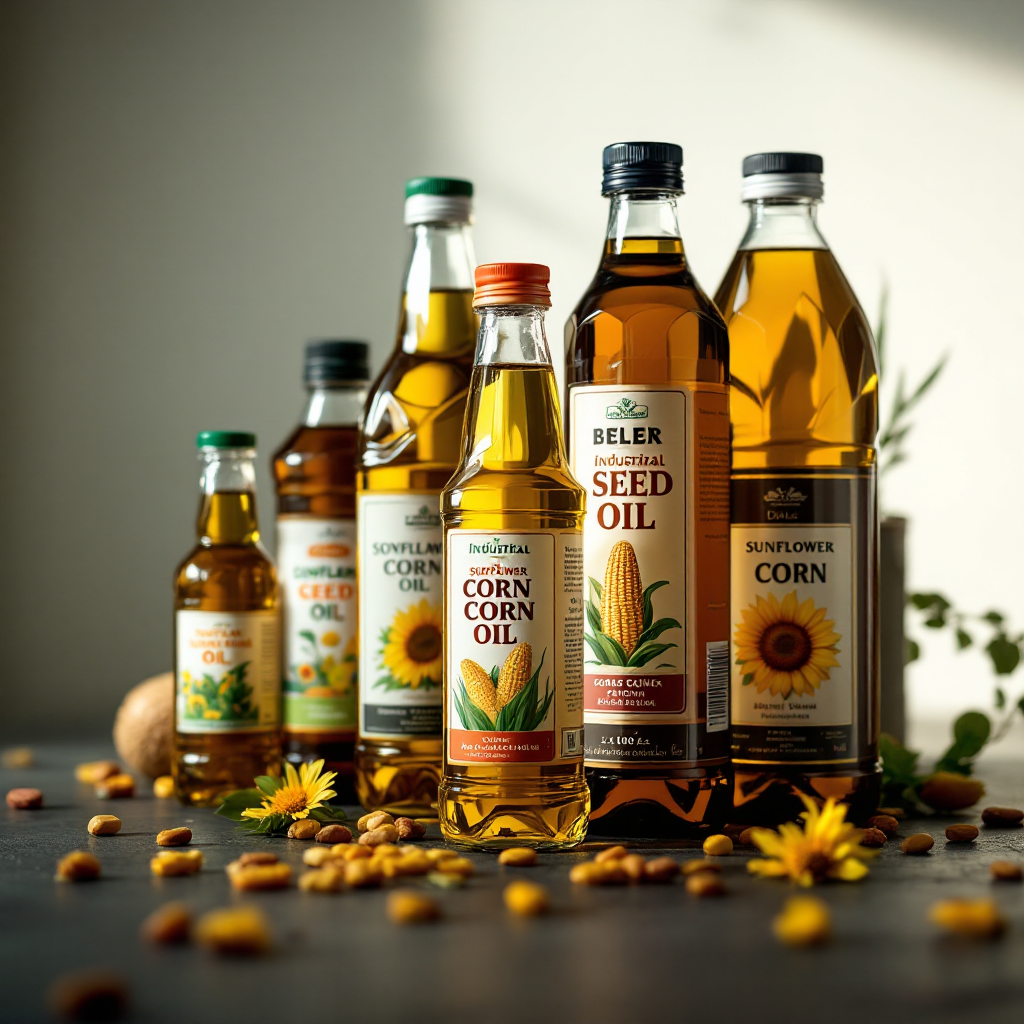
What foods have seed oils? The answer is more alarming than most people realize. Industrial seed oils, including soybean, canola, corn, sunflower, safflower, and cottonseed, are hidden in nearly every processed food, restaurant meal, and packaged snack on grocery shelves. They were never part of the human diet until the 20th century, when chemical extraction methods turned factory byproducts into kitchen staples. Today they appear in salad dressings, baked goods, fried foods, frozen meals, protein bars, and even products labeled as healthy. Understanding where these oils hide is the first step toward reclaiming the clarity and vitality they quietly erode.
The Industrial Oils Hiding in Plain Sight
Seed oils are not a single product. They are a category of fats extracted from seeds and grains using high heat, chemical solvents, and industrial processing. The most common culprits include soybean oil, canola oil, corn oil, sunflower oil, safflower oil, cottonseed oil, grapeseed oil, and palm oil. Each began as an industrial material, used for soap, paint, varnish, and lubricants before entering the food supply. Their shift into kitchens was not driven by nutrition science. It was driven by economics.
When these oils are refined, they are stripped of natural antioxidants, bleached to remove color, and deodorized to eliminate the rancid smell that develops during extraction. What remains is a chemically unstable fat loaded with omega-6 fatty acids. Humans evolved eating omega-6 and omega-3 fats in roughly equal proportions. Modern diets now deliver ratios as high as 20:1, fueling systemic inflammation throughout the body. That imbalance is not accidental. It is the predictable result of an engineered food supply built for profit, not coherence.
The question of what foods have seed oils begins with recognizing how widespread the contamination is. These oils do not announce themselves. They appear under dozens of names, tucked into ingredient lists most people never read. Research from Harvard Medical School confirms that replacing saturated fats with industrial seed oils does not improve heart health as originally claimed, and mounting evidence links high omega-6 intake to inflammation, metabolic dysfunction, and neurological decline.
Processed Foods and Packaged Goods
Walk down any grocery aisle and you are surrounded by seed oils. They dominate the center aisles where packaged, boxed, and bottled foods live. Crackers, chips, cookies, granola bars, frozen pizzas, boxed macaroni, canned soups, instant noodles, microwave popcorn, and flavored rice mixes all rely on soybean or canola oil as their fat base. The cost is low, the shelf life is long, and the flavor is neutral enough to hide behind salt and sugar.
Salad dressings are one of the worst offenders. Even brands marketed as heart-healthy or natural use soybean or canola oil as the first ingredient. Mayonnaise, unless specifically labeled as made with olive or avocado oil, is almost always soybean-based. Margarine and vegetable shortening are hydrogenated seed oils, chemically altered to stay solid at room temperature. These were marketed for decades as healthier than butter. The opposite is true.
Protein bars, meal replacement shakes, and even some baby formulas contain sunflower or safflower oil. The label might say high protein or fortified with vitamins, but the fat source is industrial. Nut butters, unless they are single-ingredient products, often include palm or cottonseed oil to prevent separation. Hummus, guacamole, and other refrigerated dips frequently list canola oil. Even bread, a product that traditionally required only flour, water, yeast, and salt, now contains soybean oil to extend freshness and improve texture.
If a food comes in a box, bag, or wrapper and has more than five ingredients, the odds are high that seed oils are part of the contamination driving modern dietary degeneration. The industry has made them unavoidable without deliberate effort.
Restaurant and Fast Food Preparation
Restaurants are where seed oil exposure becomes impossible to track. Nearly every commercial kitchen uses soybean, canola, or a blended vegetable oil for frying, sautéing, and grilling. The reason is cost. These oils are cheap, flavorless, and tolerant of high heat without smoking. That heat tolerance, however, comes at a biological price. When seed oils are heated repeatedly, they form lipid peroxides and aldehydes, toxic compounds linked to DNA damage, oxidative stress, and neurodegeneration.
French fries, fried chicken, onion rings, tempura, doughnuts, and churros are all cooked in industrial seed oils. The oil is rarely changed as often as it should be, meaning each batch absorbs more degraded fat. Even grilled items are often brushed with soybean oil to prevent sticking. Salads arrive pre-dressed or accompanied by packets of canola-based vinaigrette. Bread baskets come with margarine, not butter. Pasta is tossed in vegetable oil before plating.
Fast food chains are even worse. Their entire business model depends on speed and consistency, both of which require industrial fats. Burgers are cooked on flattops greased with soybean oil. Buns are baked with it. Sauces are emulsified with it. The result is a meal where every component, from the bun to the dressing to the fries, contains the same oxidized, omega-6-heavy fat. A single fast food meal can deliver more seed oil in one sitting than the human body is designed to process in a week.
Sit-down restaurants are not much better. Unless the menu specifies grass-fed butter, extra virgin olive oil, or coconut oil, assume seed oils are the default. Steakhouses brush their cuts with vegetable oil. Italian restaurants cook with blended oils that claim to be olive but are mostly canola. Asian restaurants use soybean or peanut oil for stir-frying. Mexican restaurants fry tortilla chips in cottonseed oil. Even high-end establishments use seed oils in their kitchens because the margins are tighter than diners realize.
Condiments, Sauces, and Hidden Additives
The smallest additions to a meal often carry the highest seed oil load. Ketchup, barbecue sauce, teriyaki sauce, ranch dressing, Caesar dressing, thousand island, honey mustard, and sriracha mayo all list soybean or canola oil in their top three ingredients. These are not trace amounts. In many cases, oil is the second ingredient after water or tomato paste.
Peanut butter and almond butter, unless they are natural and contain only nuts and salt, include palm or cottonseed oil to prevent the natural separation that occurs when nut oils settle. Nutella and other chocolate hazelnut spreads use palm oil as a stabilizer. Even tahini, a traditional Middle Eastern paste made from ground sesame seeds, now includes canola oil in some commercial brands to improve texture and shelf stability.
Pre-made pesto, alfredo sauce, and marinara often contain soybean oil. Canned tuna and salmon packed in oil are almost always packed in soybean oil unless the label specifies olive oil. Frozen vegetables labeled as seasoned or roasted arrive coated in sunflower or canola oil. Instant mashed potatoes contain palm oil. Boxed stuffing mixes contain partially hydrogenated soybean oil. Even spice blends and seasoning packets include soybean oil as an anti-caking agent.
The pattern is universal. Any food designed for convenience has been engineered for shelf life, and seed oils are the cheapest way to achieve that goal. The result is a food system where avoiding these oils requires reading every label, questioning every restaurant, and rejecting most of what the modern supply chain offers. That is not paranoia. That is pattern recognition. Understanding the biological cost of these oils on cerebrospinal fluid and neurological coherence makes the vigilance worth it.
Baked Goods and Desserts
Commercial bakeries depend on seed oils to produce consistent texture, extend freshness, and reduce cost. Cookies, brownies, muffins, cakes, pastries, croissants, and doughnuts all use soybean, canola, or palm oil in place of butter or lard. Even bakery items labeled as artisan or handmade often contain industrial fats. The dough for pizza, flatbreads, and sandwich rolls includes soybean oil. Pie crusts and tart shells use shortening made from hydrogenated cottonseed or palm oil.
Grocery store cakes, whether sheet cakes or individual slices, rely on vegetable shortening for frosting stability. Whipped toppings and non-dairy creamers are made from palm kernel oil and corn syr