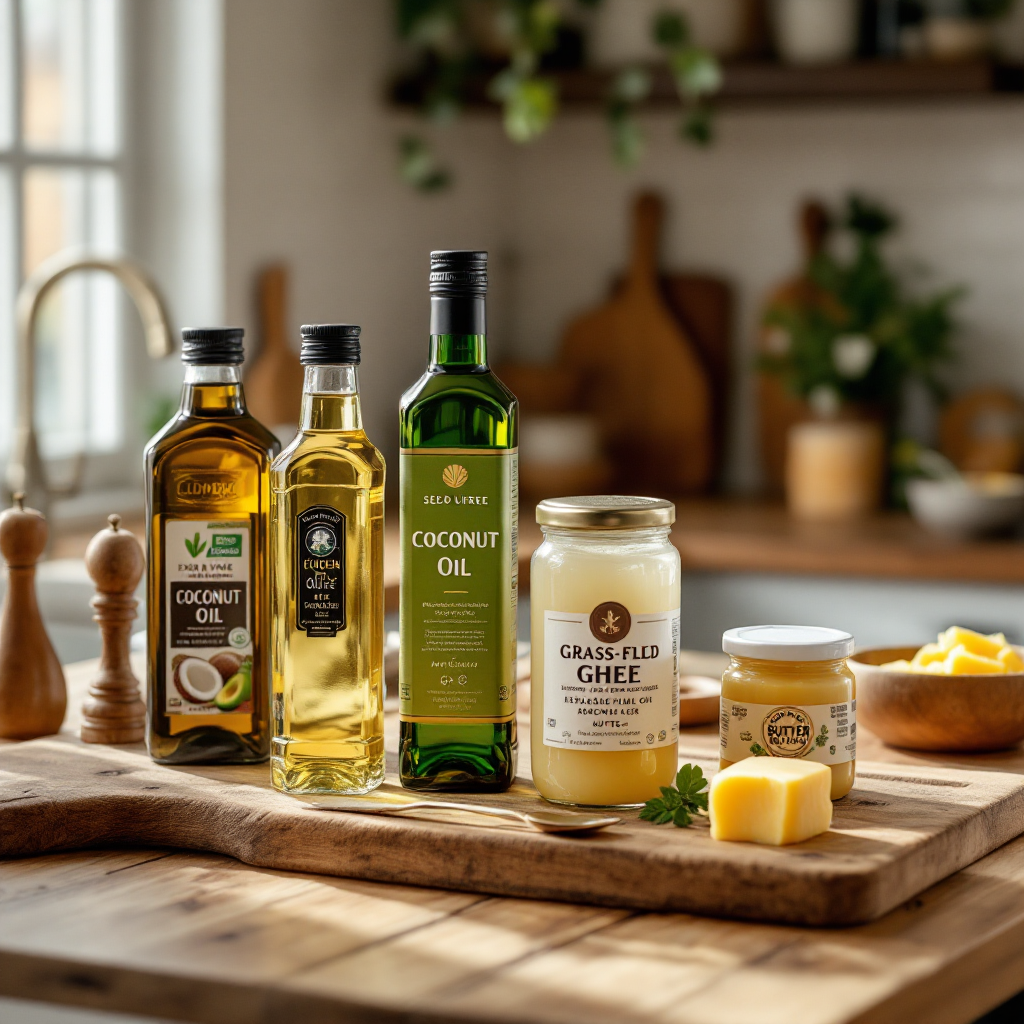
Seed oil free cooking oils are the foundation of a kitchen that builds health instead of eroding it. Industrial seed oils like canola, soybean, corn, and sunflower have flooded the modern food supply, marketed as heart healthy while quietly fueling inflammation, brain fog, and metabolic dysfunction. Switching to seed oil free alternatives is one of the simplest and most powerful upgrades you can make to protect your nervous system, stabilize your mood, and restore the body’s natural coherence.
The shift away from seed oils is not a trend. It is a correction. For most of human history, these oils did not exist in the human diet. They were extracted using industrial processes invented less than a century ago, rebranded from factory lubricants into food products, and sold to a population that had no evolutionary relationship with them. Your body was never designed to run on this fuel. Reclaiming dietary sovereignty begins with understanding what belongs in your body and what does not.
Why Seed Oils Damage Your Body
Industrial seed oils are chemically unstable. Most are overloaded with omega-6 fatty acids, which humans evolved to consume in balance with omega-3s at roughly a one to one ratio. Today the modern Western diet often hits twenty to one or higher. That imbalance drives systemic inflammation, damages the membranes that protect and stabilize cells, and disrupts the way neurons communicate.
Because the brain is roughly sixty percent fat by weight, it is one of the first organs to suffer. Seed oils integrate directly into brain tissue, where they oxidize easily under heat and metabolic stress. Once oxidized, they form lipid peroxides and aldehydes, compounds linked to DNA damage, neurodegeneration, and metabolic dysfunction. The result is not just weight gain. It is biochemical instability that fuels mood swings, brain fog, dependency on processed food, and eventually dependency on pharmaceuticals to manage the fallout.
The industrial extraction process makes this worse. To get oil from seeds that contain very little fat, manufacturers use hexane solvents, high heat, and chemical deodorizers. What emerges is a product stripped of nutrients, loaded with trans fats from partial hydrogenation, and saturated with residues the body was never meant to process. This is not food. It is a byproduct of industrial agriculture, repackaged and sold as a staple.
Seed Oil Free Cooking Oils That Protect Your Brain
Choosing seed oil free cooking oils means returning to fats humanity used for thousands of years, fats that are chemically stable, nutrient dense, and aligned with the body’s design. These oils do not oxidize easily under heat. They support hormone production, brain function, and cellular repair. They are what your ancestors cooked with before industry intervened.
Extra virgin olive oil is the gold standard for low to medium heat cooking. It is rich in monounsaturated fats and polyphenols that reduce inflammation and protect cardiovascular health. Use it for sautéing, roasting, and dressings. Choose cold pressed, organic, and stored in dark glass to preserve its integrity.
Avocado oil handles higher heat without breaking down. Its smoke point sits around five hundred twenty degrees Fahrenheit, making it ideal for stir frying and high temperature roasting. Like olive oil, it is primarily monounsaturated and carries antioxidants that support brain and heart health.
Coconut oil is a saturated fat that remains stable under heat and provides medium chain triglycerides, which the body converts into ketones for quick brain fuel. It works well for baking, frying, and any application where a mild coconut flavor is acceptable. Refined coconut oil is flavorless and tolerates higher heat than the virgin version.
Grass fed butter and ghee are traditional cooking fats rich in fat soluble vitamins A, D, E, and K2. Ghee is clarified butter with the milk solids removed, giving it a higher smoke point and making it suitable for those sensitive to dairy. Both are excellent for sautéing, baking, and adding richness to vegetables and grains.
Animal fats like tallow, lard, and duck fat were kitchen staples for centuries before seed oils arrived. They are chemically stable, flavorful, and nutrient dense when sourced from pasture raised animals. Tallow and lard have high smoke points and work beautifully for frying and roasting. These fats carry the fatty acid profile the human body recognizes and uses efficiently.
What Happens When You Remove Seed Oils
The benefits of switching to seed oil free cooking oils are not subtle. Within weeks, many people report clearer thinking, more stable energy, better digestion, and reduced joint pain. The chronic low grade inflammation that seed oils sustain begins to quiet. The brain, no longer flooded with oxidized fats, can repair its membranes and restore signaling pathways that govern mood, focus, and impulse control.
This is not placebo. It is biochemistry. When you stop feeding the body damaged fats, the body stops defending itself against them. The immune system calms. The liver, no longer overloaded with detoxifying rancid oils, can focus on its other functions. Insulin sensitivity improves. Hormonal balance restores. The entire system moves toward coherence instead of compensation.
For those exploring the biological mechanisms of inner transformation, diet is not separate from spiritual practice. It is the foundation. The quality of the fuel determines the clarity of the signal. A nervous system running on industrial waste cannot sustain the higher states that practices like fasting, breathwork, and meditation open. Cleaning up the oil in your kitchen is cleaning up the operating system of your consciousness.
How to Identify Hidden Seed Oils
Removing seed oils from your cooking is step one. Removing them from your entire diet is the full practice. These oils hide in nearly every processed food on grocery shelves: salad dressings, mayonnaise, crackers, bread, frozen meals, restaurant food, and anything labeled as fried or sautéed. Even products marketed as healthy often contain soybean, canola, or sunflower oil.
Read ingredient labels carefully. If a product lists vegetable oil, it is almost always soybean oil. If it says canola, corn, sunflower, safflower, grapeseed, or cottonseed oil, avoid it. These are all industrial seed oils. The only oils that belong in your body are the ones listed earlier: olive, avocado, coconut, butter, ghee, and animal fats from clean sources.
Restaurants are the hardest variable to control. Most kitchens use seed oils by default because they are cheap and flavorless. When eating out, ask what oil they cook with. Request butter or olive oil if available. Choose grilled, steamed, or roasted dishes over fried. The inconvenience of asking is minor compared to the cumulative damage of eating oxidized fats several times a week.
The deeper you look, the more you realize how thoroughly seed oils have infiltrated the food system. This is not an accident. It is the result of lobbying, subsidy, and marketing that turned industrial byproducts into dietary staples. The complete framework for reclaiming sovereignty over your body, your chemistry, and your awareness requires seeing these patterns clearly and choosing differently at every opportunity.
The Inflammation Connection
Chronic inflammation is the root of most modern diseases: heart disease, diabetes, cancer, autoimmune conditions, and neurodegenerative disorders. Seed oils are one of the primary drivers of that inflammation. Their high omega-6 content disrupts the balance of signaling molecules in the body, tipping the system toward a pro inflammatory state that never fully resolves.
When you replace seed oils with stable, nutrient dense fats, you remove a major source of that inflammatory load. The body can finally shift from defense to repair. This is when healing accelerates. Joints stop aching. Skin clears. Digestion improves. Mental clarity sharpens. These are not separate symptoms resolving independently. They are all downstream effects of reducing systemic inflammation.
The mechanism is straightforward. Omega-6 fats are converted into arachidonic acid, which the body uses to produce pro inflammatory compounds called eicosanoids. In small amounts, this is healthy and necessary for immune response and tissue repair. In