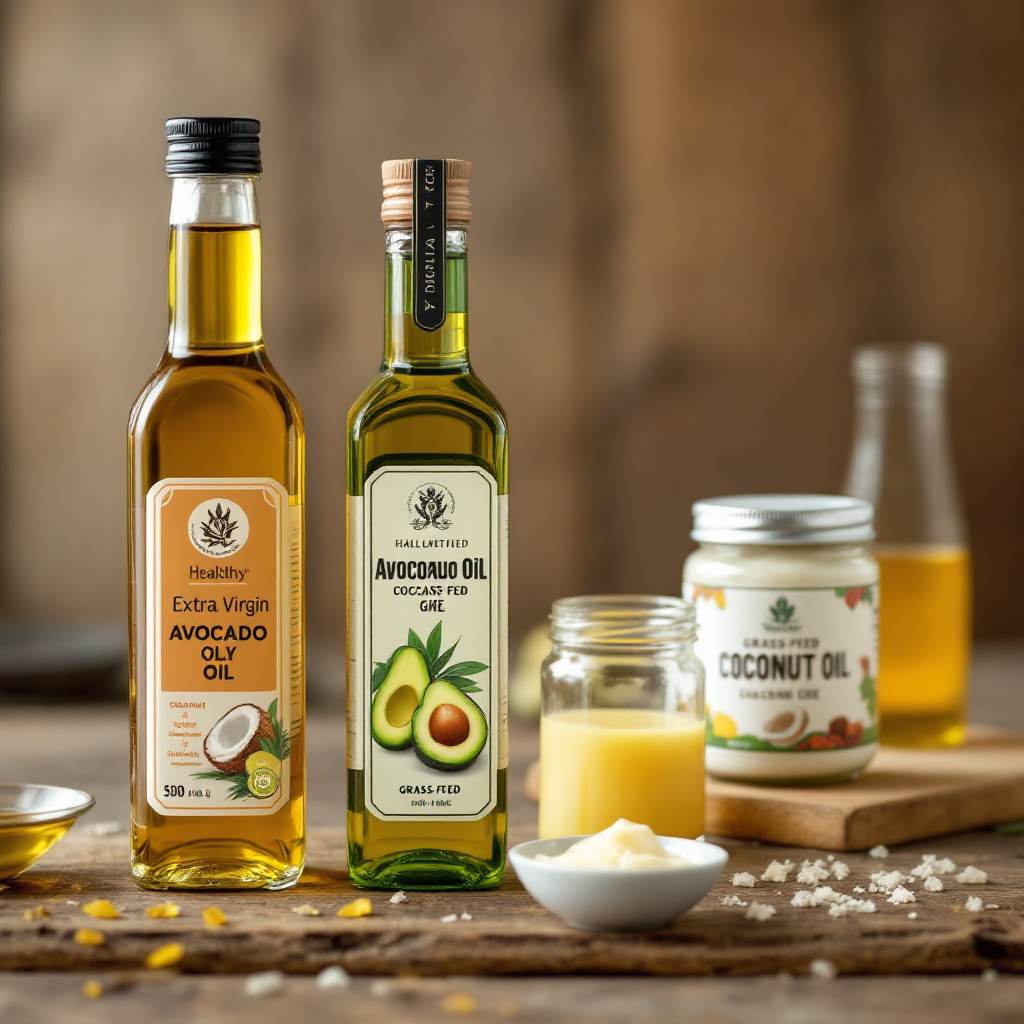
What oils are not seed oils? The answer separates the fats that nourish your body from the industrial products masquerading as food. Oils that are not seed oils include olive oil, avocado oil, coconut oil, grass-fed butter, ghee, and animal fats like tallow and lard. These traditional fats have sustained human health for thousands of years. Seed oils, canola, soybean, corn, sunflower, safflower, and cottonseed, are recent industrial inventions that flood your system with omega-6 fatty acids and oxidative stress. The distinction matters because your brain, hormones, and cellular membranes are built from the fats you consume. Choose wrong, and you’re constructing your biology from damaged materials.
The Traditional Fats That Sustained Humanity
For most of human history, fats came from whole foods and simple extraction methods. Extra virgin olive oil was pressed from olives. Butter was churned from cream. Coconut oil was extracted from coconut meat. These processes preserved the natural structure of the fats and delivered them alongside protective compounds like polyphenols, vitamins, and antioxidants. When you ask what oils are not seed oils, you’re really asking which fats your ancestors would recognize. The answer is straightforward: oils derived from fruit, nuts in their whole form, or animal sources that required no chemical solvents to extract.
Extra virgin olive oil stands at the top of this category. Rich in monounsaturated fats and polyphenols, it has been the cornerstone of Mediterranean diets for millennia. Studies consistently link olive oil consumption to reduced inflammation, improved cardiovascular health, and lower rates of neurodegenerative disease. Avocado oil carries a similar profile, with high heat tolerance and a neutral flavor that works across cooking styles. Coconut oil, though higher in saturated fat, provides medium-chain triglycerides that the body metabolizes differently than long-chain fats, offering quick energy without the inflammatory cascade.
Animal fats, grass-fed butter, ghee, tallow, and lard, have been vilified for decades. That campaign was not driven by science. It was driven by the same industries that needed to sell cheap seed oils. Grass-fed butter contains fat-soluble vitamins A, D, E, and K2, plus conjugated linoleic acid, a compound linked to fat metabolism and anti-cancer properties. Tallow and lard, rendered from healthy animals, offer stable fats that tolerate high heat without breaking down into toxic byproducts. These are the fats your great-grandparents cooked with before industrial agriculture rewrote the food supply.
Why Seed Oils Became the Default
Industrial seed oils were never part of the human diet until the early 20th century. They began as factory byproducts, used for soap, paint, and machine lubricants. The invention of chemical extraction and hydrogenation made it possible to produce them at massive scale and low cost. When public health campaigns demonized saturated fat in the 1960s and 1970s, seed oils were rebranded as heart-healthy alternatives. The science behind that rebrand was compromised from the start. The Sugar Research Foundation paid Harvard scientists to shift blame from sugar to fat. Ancel Keys cherry-picked data to support his hypothesis that dietary fat caused heart disease. The food pyramid followed, and seed oils flooded the market.
What the marketing ignored was the biochemistry. Seed oils are loaded with omega-6 fatty acids. Humans evolved on a diet with an omega-6 to omega-3 ratio close to one to one. The modern Western diet often exceeds twenty to one. That imbalance drives chronic inflammation, the root cause of heart disease, diabetes, autoimmune disorders, and neurodegeneration. Omega-6 fats are essential in small amounts, but when consumed in excess, they produce pro-inflammatory signaling molecules called eicosanoids. Your immune system interprets this as a low-grade emergency and stays activated indefinitely.
Seed oils also oxidize easily. Omega-6 fatty acids are polyunsaturated, meaning they have multiple double bonds that break down under heat, light, and oxygen exposure. Once oxidized, these fats form lipid peroxides and aldehydes, compounds that damage DNA, mitochondria, and cell membranes. Heating seed oils during cooking accelerates this process. When you fry food in canola or soybean oil, you’re not just adding fat. You’re adding oxidative stress directly into your bloodstream. The damage accumulates silently, showing up years later as cognitive decline, metabolic disease, and accelerated aging.
What Seed Oils Do to Your Brain
Your brain is roughly sixty percent fat by dry weight. The fats you eat become the fats that build your neurons, myelin sheaths, and synaptic membranes. When those structural fats come from oxidized seed oils, your brain’s architecture degrades from within. Research links high omega-6 consumption to increased rates of depression, anxiety, and attention deficits. The mechanism is direct: oxidized fats disrupt the fluidity of neuronal membranes, impairing the transmission of electrical signals and neurotransmitter release. Your mood, focus, and mental clarity are downstream consequences of the fats you consumed months earlier.
Seed oils also fuel neuroinflammation. Microglia, the brain’s immune cells, activate in response to oxidative stress. Chronic microglial activation damages neurons and accelerates cognitive decline. This isn’t speculative. Autopsies of Alzheimer’s patients consistently show elevated markers of lipid peroxidation and inflammatory signaling in affected brain regions. The plaques and tangles that define the disease are consequences, not causes. The root dysfunction begins with the fats that built the tissue in the first place. If you want a brain that stays sharp, coherent, and resilient, you need to feed it fats that support stability rather than drive chaos.
The contrast becomes undeniable when you replace seed oils with traditional fats. Olive oil, rich in oleic acid and polyphenols, has been shown to protect against cognitive decline and support healthy aging. Omega-3 fats from fish or algae oil provide the building blocks for anti-inflammatory signaling molecules that counterbalance omega-6 excess. Coconut oil supplies ketones, an alternative fuel source the brain can use when glucose metabolism is impaired. Choosing what oils are not seed oils is not a dietary preference. It’s a decision about the quality of the hardware running your consciousness. Food system transparency and sovereign nutrition choices start with understanding which fats build clarity and which ones drive degeneration.
How to Identify and Replace Seed Oils
Seed oils hide in nearly every processed food on grocery shelves. Salad dressings, mayonnaise, crackers, granola bars, frozen meals, baked goods, and restaurant fried foods all rely on cheap soybean, canola, or sunflower oil. Reading ingredient labels becomes non-negotiable. If a product lists soybean oil, canola oil, corn oil, sunflower oil, safflower oil, cottonseed oil, grapeseed oil, or rice bran oil, it contains seed oils. Even products labeled as natural or organic often use these oils because they’re inexpensive and shelf-stable. The only way to avoid them is to read every label and cook most of your food at home.
Replacing seed oils in your kitchen is simpler than most people expect. For high-heat cooking, use avocado oil, ghee, or grass-fed tallow. For medium-heat sautéing, extra virgin olive oil or coconut oil work well. For dressings and cold preparations, stick with extra virgin olive oil or avocado oil. Grass-fed butter enhances flavor in ways seed oils never could. If you’re accustomed to the neutral taste of processed oils, the adjustment period lasts a week or two. After that, real fats taste richer, more satisfying, and more complete. Your body recognizes them as food, not factory products.
Dining out presents a challenge. Most restaurants use seed oils for everything, frying, sautéing, and even garnishing finished plates. Unless a restaurant explicitly advertises that it uses olive oil, butter, or animal fats, assume seed oils are in the food. High-end establishments sometimes accommodate requests. Chain restaurants rarely do. The practical solution is to limit restaurant meals and prioritize home cooking whenever possible. The complete framework for reclaiming dietary sovereignty involves not just swapping oils but restructuring your relationship with convenience, flavor, and the industries that profit from your dependency on cheap, inflammatory fats.
The Omega-6 to Omega-3 Ratio
Understanding what oils are not seed oils requires understanding the fatty acid balance your body was designed to maintain. Omega-6 and omega-3 fats are both essential, meaning your body cannot produce them and must obtain them from food. The problem is not that omega-6 fats are inherently toxic. The problem is the ratio. Archaeological evidence and studies of hunter-gatherer populations suggest humans thrived on ratios between one to one and four to one. The modern Western diet often exceeds fifteen to one, with some individuals reaching twenty to one or higher. That imbalance creates a biochemical environment where inflammation becomes chronic and systemic.
Omega-3 fats, particularly EPA and DHA, produce anti-inflammatory signaling molecules called resolvins and protectins. These compounds help the immune system resolve inflammation after an injury or infection, returning the body to a state of balance. Omega-6 fats, when consumed in excess, produce eicosanoids that promote inflammation and keep the immune system activated. Both pathways are necessary. The issue is that modern diets flood the omega-6 pathway while starving the omega-3 pathway, leaving the body stuck in a pro-inflammatory state with no off switch.
Correcting the ratio requires two actions: reduce omega-6 intake by eliminating seed oils, and increase omega-3 intake from fatty fish, algae oil, chia seeds, flaxseeds, or walnuts. The body cannot convert plant-based omega-3s, ALA, into EPA and DHA efficiently, so direct sources of EPA and DHA are preferable for most people. Within weeks of rebalancing this ratio, many people report improved mood, clearer thinking, better sleep, and reduced joint pain. The inflammation that felt like a permanent baseline was actually a reversible consequence of eating the wrong fats for years. Biology is forgiving when you stop poisoning it.
Fats and the Endocrine System
Hormones are built from fats. Cholesterol, a molecule demonized for decades, is the precursor to testosterone, estrogen, progesterone, cortisol, and vitamin D. When you replace traditional fats with seed oils, you disrupt the raw materials your endocrine system needs to function. Seed oils contain phytosterols, plant compounds that mimic cholesterol and compete for absorption. While this might sound beneficial, the result is often hormonal imbalance, lower testosterone in men, irregular cycles in women, and impaired stress response across both sexes.
The pineal gland, explored in other contexts as the seat of inner perception and circadian regulation, is particularly vulnerable. Its calcification accelerates under oxidative stress, and seed oils are one of the primary dietary sources of that stress. Melatonin production declines when the pineal is burdened by inflammation and lipid peroxidation. Sleep suffers. The body’s repair cycles, which depend on deep sleep and melatonin signaling, become fragmented. Over time, this cascades into metabolic dysfunction, immune suppression, and accelerated aging. What started as a choice about cooking oil ends up determining how well your entire hormonal network operates. Choosing oils that are not seed oils protects the glands that regulate mood, energy, reproduction, and consciousness itself.
Restoring endocrine health requires removing seed oils and reintroducing fats that support hormone synthesis. Grass-fed butter and ghee provide fat-soluble vitamins that activate genetic pathways tied to repair and longevity. Olive oil’s polyphenols reduce oxidative stress and support mitochondrial function. Coconut oil’s medium-chain triglycerides bypass normal fat metabolism and provide quick, clean energy without inflammatory signaling. These fats don’t just feed the body. They restore the coherence required for the endocrine system to function as it was designed. Understanding the biological mechanisms of inner anointing begins with recognizing that the oils you consume shape the secretions your glands produce.
Cooking Methods and Fat Stability
Not all fats tolerate heat equally. The smoke point, the temperature at which a fat begins to break down and produce smoke, is often cited as the key variable. That’s only part of the picture. What matters more is oxidative stability, the fat’s resistance to forming harmful compounds under heat. Saturated and monounsaturated fats are far more stable than polyunsaturated fats. This is why seed oils, high in polyunsaturated omega-6 fats, are poor choices for cooking despite sometimes having high smoke points. The chemical structure breaks down under heat even before visible smoke appears.
For high-heat cooking, frying, roasting, and searing, the best options are avocado oil, ghee, grass-fed tallow, or refined coconut oil. These fats remain stable at temperatures above four hundred degrees Fahrenheit. Extra virgin olive oil, despite myths to the contrary, is suitable for medium-heat cooking, sautéing, and baking, but not deep frying. Its polyphenols provide antioxidant protection that offsets minor oxidation. For cold applications, salad dressings, drizzling, and finishing dishes, extra virgin olive oil and avocado oil are ideal. Flaxseed oil and walnut oil, both high in omega-3 fats, should never be heated and should be stored in the refrigerator to prevent oxidation.
Cooking methods also influence fat quality. Steaming and gentle simmering preserve fats better than high-heat frying. When frying is necessary, use the smallest amount of fat needed and avoid reusing oil. Reheating fats accelerates oxidation and multiplies the formation of toxic byproducts. Restaurants that reuse fryer oil for days or weeks are serving food soaked in oxidized, polymerized fats that damage DNA and cell membranes. The convenience of eating out comes with a biochemical cost most people never calculate. Preparing your own meals with stable fats is the most reliable way to protect your long-term health and cognitive function.
Seed Oils and the Industrial Food System
The dominance of seed oils in the food supply is not accidental. It reflects deliberate choices by corporations and governments that prioritized profit over public health. Soybeans and corn are heavily subsidized crops in the United States. Extracting oil from these crops creates an additional revenue stream and allows manufacturers to market byproducts as food ingredients. The result is that soybean oil alone accounts for the majority of fat consumption in the American diet, despite never having been part of human nutrition until the last century. This is not a free market outcome. It’s a subsidized, engineered dependency.
The same industries that produce seed oils also fund nutrition research, sit on advisory boards, and lobby regulatory agencies. When studies question the safety of seed oils, industry-funded researchers publish rebuttals emphasizing their benefits. When guidelines recommend reducing saturated fat, seed oils are promoted as the alternative. The revolving door between agribusiness, academia, and government ensures that policies align with corporate interests rather than biological reality. This is not a conspiracy theory. It’s regulatory capture, a well-documented phenomenon across industries where the regulated entities control the regulators.
Breaking free from this system requires individual action. No government agency or industry body will protect your health when their incentives run in the opposite direction. You must read labels, ask questions, and refuse to accept convenience as a justification for consuming inflammatory, oxidized fats. The effort required to eliminate seed oils from your diet is minor compared to the cumulative damage they cause over decades. Every meal is a choice. Every choice is a vote for the biology you want to live in. Sovereignty begins with what you put on your plate and what you refuse to swallow.
The Redacted Protocols for Fat Metabolism Optimization
Eliminating seed oils is step one. Optimizing how your body processes and utilizes fats requires understanding timing, pairing, and metabolic state. There are specific windows during the day when fat metabolism is most efficient, tied to circadian rhythms and hormonal pulses. Consuming certain fats at precise intervals relative to fasting periods triggers autophagy and mitochondrial biogenesis, the creation of new energy-producing organelles within cells. The practitioners who master this report sustained energy, mental clarity, and metabolic flexibility that allows them to shift between fuel sources without crashes. The exact timing, the meal composition, and the preparation method are detailed in REDACTED, READ CHAPTER 15. The protocol is not complex, but it is precise. Most people miss the window entirely and wonder why their results plateau.
Fat-soluble vitamins, A, D, E, and K2, require specific ratios and co-factors to absorb properly. Vitamin K2 in particular plays a role in directing calcium to bones and teeth rather than allowing it to accumulate in soft tissues like the pineal gland and arteries. The foods richest in K2 are grass-fed butter, certain aged cheeses, and natto. But absorption depends on REDACTED, READ CHAPTER 15, a pairing most people never consider. The result is that they consume the vitamin but fail to activate its protective effects. The full mechanism is explained in Chapter 15 of Master Thyself.
There is also a cyclical fat-loading protocol used by advanced practitioners, one that mimics ancestral feast-and-famine patterns but on a compressed timeline. It involves REDACTED, READ CHAPTER 15 to reset leptin sensitivity and restore metabolic flexibility. Those who complete the full cycle report a permanent shift in how their body responds to fats, no more afternoon crashes, no more brain fog, and no more dependency on frequent meals. The protocol duration, the fat types, and the refeeding strategy are all mapped in Chapter 15. Attempting the protocol without the full structure often produces the opposite result: metabolic stress rather than metabolic optimization.
Detoxifying Stored Seed Oils
Switching to healthy fats today does not erase the seed oils you consumed for years or decades. Those fats are stored in adipose tissue and incorporated into cell membranes throughout your body. As you lose weight or mobilize stored fat for energy, those old fats re-enter circulation, bringing oxidized lipids and inflammatory signaling molecules back into your bloodstream. This can create a temporary worsening of symptoms, brain fog, fatigue, joint pain, before improvement occurs. The body is not failing. It is cleaning house. But that cleaning process can be accelerated and supported through targeted detoxification strategies.
The liver is the primary organ responsible for processing and neutralizing oxidized fats. Supporting liver function with specific foods and compounds speeds the detox process significantly. Cruciferous vegetables like broccoli, kale, and Brussels sprouts contain sulforaphane, a compound that activates detoxification enzymes in the liver. Milk thistle and dandelion root support bile production and flow, which is how the liver excretes processed toxins. The specific dosages, timing, and combination that maximize clearance are detailed in REDACTED, READ CHAPTER 15. Guessing the dosage often leads to incomplete detox and prolonged discomfort.
Sweating through exercise or sauna use also helps eliminate fat-soluble toxins. But there is an optimal frequency and duration that balances detox with recovery. Overdoing it stresses the system further. Underdoing it leaves toxins circulating longer than necessary. The protocol includes REDACTED, READ CHAPTER 15, paired with hydration and electrolyte repletion to prevent mineral depletion. The timeline for full clearance varies by individual, but most people notice dramatic improvements in energy and mental clarity within the first thirty days of following the complete protocol. Read Chapter 15 of Master Thyself on Amazon for the full detoxification sequence.
The Inflammatory Cascade and Chronic Disease
Seed oils do not cause heart attacks or strokes directly. They create the conditions that make those events inevitable. The inflammatory cascade begins with oxidized omega-6 fats in the bloodstream. The immune system recognizes these as damaged molecules and sends white blood cells to clean them up. Chronic exposure means the immune system never turns off. This low-grade inflammation damages the endothelial lining of blood vessels, creating microscopic injuries. The body attempts to repair those injuries with cholesterol and calcium, forming plaques. Over decades, those plaques narrow arteries and become unstable. A rupture triggers a clot. The heart attack or stroke is the final event in a chain that began with cooking oil.
The same inflammatory process drives metabolic syndrome, insulin resistance, type two diabetes, and obesity. Oxidized fats interfere with insulin signaling, making cells less responsive to the hormone that regulates blood sugar. The pancreas compensates by producing more insulin, but eventually it cannot keep up. Blood sugar rises. Fat accumulates in the liver and around organs. The liver becomes insulin-resistant as well, creating a vicious cycle where every meal triggers excessive insulin release and fat storage. This is not a calorie problem or a willpower problem. It is a biochemical consequence of consuming fats that disrupt metabolic signaling.
Cancer risk also rises with seed oil consumption. Oxidative stress damages DNA, creating mutations that can lead to malignancy. Chronic inflammation suppresses immune surveillance, the body’s ability to recognize and destroy abnormal cells before they become tumors. Omega-6 fats also fuel the growth of certain cancers by providing the raw materials for pro-inflammatory signaling molecules that tumors use to recruit blood vessels and evade immune attack. Reducing seed oil intake lowers cancer risk through multiple mechanisms simultaneously. This is not alternative medicine. It is molecular biology applied to dietary choices. Reclaiming sovereignty over your body requires understanding which inputs drive disease and which inputs support repair.
Teaching Children About Fats
Children do not choose the oils their food is cooked in. That responsibility falls to parents and caregivers. A child’s developing brain is even more vulnerable to oxidized fats than an adult’s. Myelin, the insulating sheath around neurons that allows for fast signal transmission, is built primarily from fats. If those fats come from damaged, inflammatory sources, the quality of myelin suffers. Behavioral issues, attention deficits, and mood instability often trace back to neuroinflammation fueled by poor dietary fats. The 1997 case of Central Alternative High School in Appleton, Wisconsin proved this conclusively. Swap processed foods and seed oils for whole foods and traditional fats, and behavior transforms without medication or therapy.
Teaching children to recognize what oils are not seed oils gives them a skill that protects their health for life. Explain why reading ingredient labels matters. Show them how to identify hidden seed oils in snacks, cereals, and frozen meals. Involve them in cooking with real fats so they understand what food should taste like. When they eat at friends’ houses or school cafeterias, they will already know the difference. This is not about creating food anxiety. It is about building literacy. A child who understands why certain fats harm them is far more likely to make better choices independently as they grow older.
The economic argument often arises: seed oils are cheaper. That is true only if you ignore long-term costs. Medical bills, lost productivity, cognitive decline, and chronic disease far outweigh the price difference between a bottle of soybean oil and a bottle of olive oil. The upfront cost of real food is an investment in decades of better health. Families that prioritize traditional fats report fewer doctor visits, better focus in school, improved athletic performance, and more stable moods. The return on investment is measurable within months. Choosing oils that are not seed oils is not a luxury. It is basic preventive medicine.
Cultural Shifts and the Return to Traditional Fats
Public awareness of seed oil toxicity is growing. Social media influencers, independent researchers, and health advocates are spreading information faster than industry-funded institutions can suppress it. Restaurants are beginning to advertise that they cook with olive oil or animal fats, recognizing that consumers are actively seeking alternatives. Brands marketing seed-oil-free snacks and condiments are gaining traction. This shift is happening from the ground up, driven by individuals who experienced health improvements after eliminating seed oils and shared their stories. The food industry will adapt only when consumer demand forces it to. Every purchase is a signal. Every label you read changes the algorithm.
Traditional food cultures never abandoned healthy fats. Mediterranean, Middle Eastern, and South Asian cuisines have always relied on olive oil, ghee, and coconut oil. French and Italian cooking features butter prominently. These are not accidents of geography. They are the result of generations observing which foods support vitality and longevity. The Western obsession with low-fat, seed-oil-based processed food is a historical anomaly, a brief experiment driven by bad science and corporate profit. Returning to traditional fats is not a fad. It is a correction, a return to what worked before industry intervened.
The future of food depends on whether enough people recognize the manipulation and choose differently. Governments will not regulate seed oils out of existence as long as agribusiness profits from them. Medical institutions will not recommend eliminating them as long as pharmaceutical companies profit from the diseases they cause. Change happens when individuals stop waiting for permission and start making sovereign choices. Understanding what oils are not seed oils is the foundation. Acting on that knowledge, one meal at a time, one label at a time, one conversation at a time, is how the system shifts. Recognizing suppressed nutritional truths and implementing them regardless of official guidelines is the path forward.
Fat as Frequency
Fats are not just fuel or building blocks. They carry energetic information. Living fats, cold-pressed olive oil, grass-fed butter, coconut oil extracted without heat, retain the coherence of their source. Industrial seed oils, extracted with hexane solvents, bleached, deodorized, and hydrogenated, carry the frequency of chemical violence. Your body registers this difference at a level deeper than biochemistry. The fats you consume integrate into every cell membrane, influencing how signals pass between neurons, how hormones bind to receptors, and how mitochondria generate energy. Coherent fats support coherent signaling. Chaotic fats produce chaotic signaling.
This principle extends beyond individual health. The collective frequency of a population eating degraded, inflammatory fats is lower, more reactive, less capable of higher-order thinking. A society dependent on seed oils is a society running on damaged hardware. Clarity, intuition, and the capacity for sustained focus all decline when the brain is built from oxidized omega-6 fats. This is not metaphor. It is observable in rising rates of anxiety, depression, ADHD, and cognitive decline across industrialized nations. The food supply is not neutral. It is a determinant of consciousness. Reclaiming your biology begins with reclaiming the fats that construct it.
The mechanism by which fats influence consciousness involves the endocrine system, the gut-brain axis, and the electromagnetic signaling within cellular membranes. Damaged fats disrupt all three simultaneously. The pineal gland, already burdened by fluoride and environmental toxins, cannot function optimally when surrounded by inflamed, oxidized tissue. The gut microbiome shifts toward dysbiosis when fed inflammatory fats, altering neurotransmitter production and vagal tone. Cell membranes lose fluidity, impairing the ion channels that generate electrical signals in neurons. The cumulative effect is a dimming of the internal light, the awareness that traditions have called the third eye, the inner flame, or the seat of the soul. Protecting that light requires choosing fats that sustain it. The specific practices that amplify this protection are mapped in REDACTED, READ CHAPTER 15. The full synthesis is in Master Thyself.
Your Kitchen as a Laboratory
Eliminating seed oils transforms your kitchen into a space of experimentation and reclamation. You learn what real food tastes like. You notice how your body responds to different fats. You observe that meals cooked in grass-fed butter leave you satisfied for hours, while meals fried in seed oils trigger cravings within ninety minutes. These are not subjective impressions. They are signals from a body that has finally been given what it was designed to run on. The adjustment period is brief. The benefits compound over time. Within a month, most people report better digestion, clearer skin, improved mood, and more stable energy. Within three months, inflammation markers drop measurably in bloodwork. Within six months, the shift becomes permanent.
Cooking becomes intentional rather than automatic. You choose avocado oil for high-heat roasting because it remains stable. You drizzle extra virgin olive oil over finished dishes to preserve its polyphenols. You render your own tallow from grass-fed beef because you want complete control over fat quality. These practices sound extreme only to those still dependent on convenience. To those who have crossed over, they are simply how adults feed themselves when they take their biology seriously. The effort is minimal. The return is profound. Every meal is an opportunity to build yourself from better materials or to continue assembling your body from industrial waste. The choice is binary. The outcome is cumulative.
The discipline required to maintain this standard is the same discipline required for any other form of mastery. You do not negotiate with seed oils. You do not make exceptions for convenience. You plan ahead, pack food when traveling, and accept that some social situations will require you to fast rather than compromise. This is not rigidity. It is sovereignty. You are the architect of your own biology. The fats you consume today are the fats that will build tomorrow’s neurons, membranes, and hormones. Treat that responsibility with the seriousness it deserves. Your clarity depends on it. Your longevity depends on it. The inner work you hope to do, meditation, breathwork, fasting, spiritual practice, will be limited by the quality of the vessel attempting it. Build the vessel from materials worthy of what you plan to access.
Closing Reflections
What oils are not seed oils? The answer is now clear. Olive oil, avocado oil, coconut oil, grass-fed butter, ghee, and animal fats from healthy sources. These are the fats that sustained humanity for millennia. They are the fats your biology recognizes, processes cleanly, and uses to build resilient, coherent tissue. Seed oils are industrial products, cheap, inflammatory, and oxidatively unstable. They were never food. They are profitable byproducts marketed as nutrition. The industries that produce them will not stop until consumers refuse to buy them. That refusal begins with you. Read every label. Cook with real fats. Teach others. The poisoned temple is your body when you fail to guard what enters it. The restored temple is what you become when you choose differently. Guard the door. Sovereignty starts at the plate.