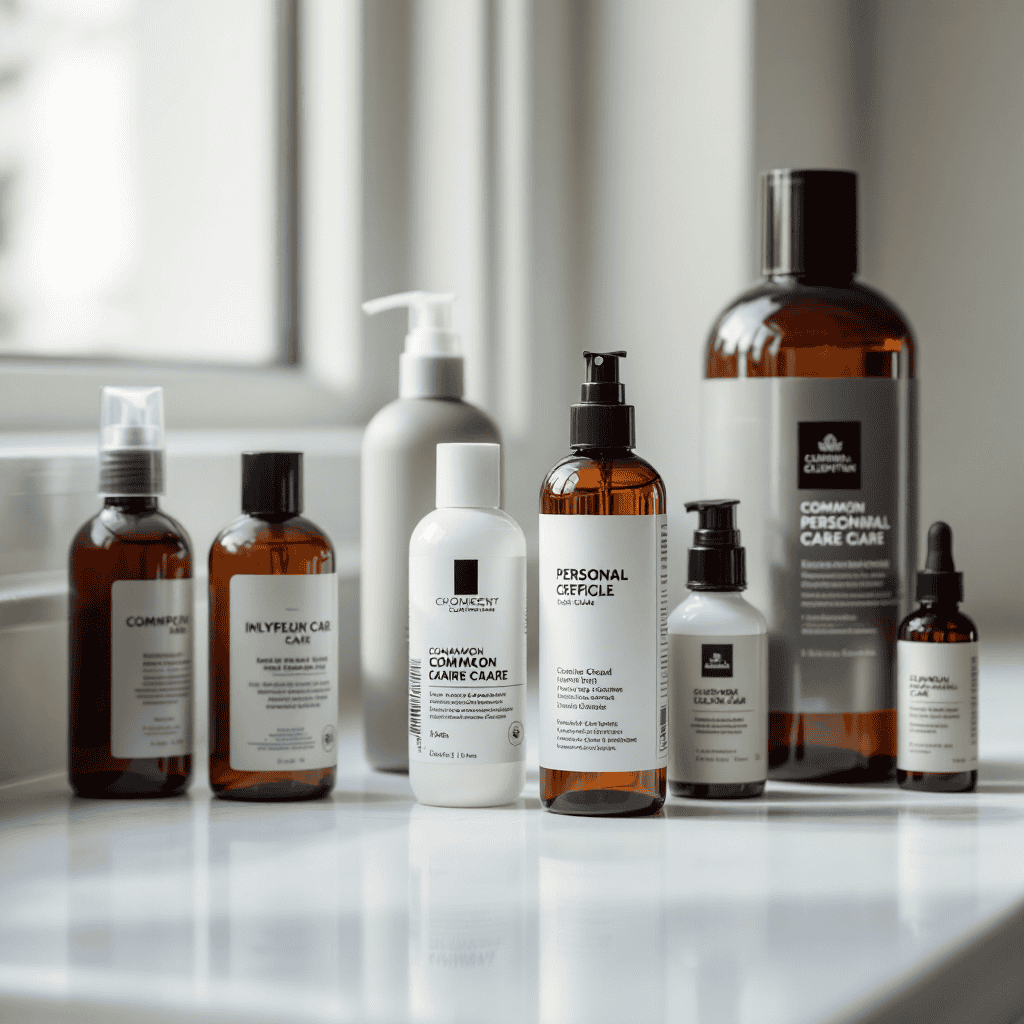
Phthalates in personal care products are endocrine-disrupting chemicals that interfere with your hormonal system, calcify the pineal gland, and keep your body in a state of biochemical chaos. These synthetic compounds, used to make fragrances last longer and plastics more flexible, are hidden in nearly every bottle on your bathroom shelf. They absorb directly through your skin, bypass your digestive filters, and go straight into your bloodstream. The industry calls them safe. The research calls them dangerous. Your endocrine system doesn’t get a vote.
What makes phthalates in personal care products particularly insidious is their ubiquity. You won’t find them listed by name on most ingredient labels. Instead, they hide behind the word “fragrance,” a legal loophole that allows manufacturers to protect proprietary formulas while concealing dozens of unlisted chemicals. Every time you see “fragrance” or “parfum” on a label, assume phthalates are present unless the product is certified phthalate-free. This isn’t paranoia. It’s pattern recognition.
What Phthalates Are and Why They Matter
Phthalates are a class of synthetic chemicals designed to increase flexibility and durability in plastics and to stabilize scents in cosmetics and personal care products. The most common types you’ll encounter are diethyl phthalate (DEP), dibutyl phthalate (DBP), and di(2-ethylhexyl) phthalate (DEHP). These compounds don’t bond chemically to the products they’re added to, which means they leach out over time, migrating into your skin, your air, and your food.
Once absorbed, phthalates mimic or block natural hormones, primarily estrogen and testosterone. They disrupt the body’s endocrine signaling at vanishingly small concentrations. Studies published by the National Institute of Environmental Health Sciences confirm that phthalates interfere with reproductive development, thyroid function, and metabolic regulation. This isn’t theoretical risk. It’s measurable biological disruption happening in real time, every time you apply lotion, spray perfume, or wash your hair with conventional shampoo.
The human body was not designed to process industrial plasticizers at the rate modern life delivers them. The liver can detoxify small, intermittent exposures. But daily, cumulative absorption from multiple sources overwhelms that system. Phthalates accumulate in fatty tissue, concentrate in glandular organs, and persist long enough to alter gene expression. What starts as a beauty routine becomes a chemical siege on the organs responsible for mood, metabolism, and spiritual perception.
Where Phthalates Hide in Your Daily Routine
The average person uses 9 to 12 personal care products each day. Most contain phthalates. The exposure isn’t accidental. It’s engineered into the supply chain. Here’s where they concentrate:
Fragranced products: Perfumes, colognes, body sprays, scented lotions, air fresheners, and scented candles all use phthalates to extend scent longevity. The fragrance industry is not required to disclose specific ingredients, so phthalates remain invisible on labels.
Hair care: Shampoos, conditioners, hairsprays, gels, and styling mousses use phthalates as solvents and fragrance carriers. Scalp absorption is highly efficient due to the density of blood vessels and hair follicles.
Cosmetics: Nail polish, lipstick, foundation, and mascara often contain DBP and other phthalates to improve texture and flexibility. Nail polish is one of the highest-concentration sources.
Body care: Deodorants, body washes, moisturizers, and sunscreens frequently contain phthalates, especially if they list fragrance as an ingredient.
Feminine hygiene products: Tampons, pads, and panty liners can contain phthalates from scented versions or from plasticized applicators and wrappers. Vaginal tissue is highly absorptive, making this one of the most direct exposure routes.
Beyond personal care, phthalates appear in household items like vinyl shower curtains, cleaning sprays, laundry detergents, and fabric softeners. The cumulative load from all sources is what creates the problem. One product might be negligible. Twelve products daily, for years, is a different equation. These patterns align with what the food system and household toxin research has documented for decades: small, approved doses become large, unapproved cumulative burdens.
How Phthalates Disrupt the Endocrine System
Your endocrine system is a network of glands that produce hormones regulating everything from metabolism and mood to reproduction and circadian rhythm. The major players include the pineal, pituitary, thyroid, adrenals, pancreas, and gonads. Each gland communicates with the others through chemical signals. When phthalates enter the bloodstream, they hijack that communication.
Phthalates are classified as xenoestrogens, meaning they mimic estrogen in the body. They bind to estrogen receptors, triggering responses the body didn’t intend and blocking natural hormones from doing their jobs. In men, this suppresses testosterone production, lowers sperm count, and disrupts reproductive development. In women, it contributes to early puberty, irregular cycles, endometriosis, and fertility issues. In children, exposure during critical developmental windows can permanently alter sexual differentiation and brain development.
The thyroid is particularly vulnerable. Phthalates interfere with thyroid hormone synthesis and transport, contributing to hypothyroidism, weight gain, brain fog, and chronic fatigue. The thyroid governs metabolic rate and energy production. Suppress it chemically, and the entire system slows. The adrenal glands, which manage stress response, also suffer. Phthalate exposure has been linked to elevated cortisol and disrupted HPA axis function, creating a feedback loop of chronic low-level stress that the body can’t resolve.
But the deepest damage occurs in the pineal gland, the small endocrine organ located deep in the brain that regulates melatonin, circadian rhythm, and according to esoteric traditions, higher states of awareness. Phthalates contribute to pineal calcification by promoting calcium deposits in soft tissue. The mechanism is indirect but measurable: endocrine disruptors alter mineral metabolism, increase oxidative stress, and reduce the body’s ability to clear calcified debris. A calcified pineal produces less melatonin, disrupts sleep cycles, and according to the framework explored throughout the Master Thyself material, dims the inner light traditions have mapped for millennia.
The Research They Don’t Advertise
Industry-funded studies on phthalates consistently conclude that exposure levels are safe. Independent research tells a very different story. A 2020 study published in Environmental Health Perspectives found that phthalate exposure during pregnancy was associated with reduced IQ and increased behavioral problems in children. Another study in the Journal of Clinical Endocrinology and Metabolism linked phthalate levels to early menopause, with women in the highest exposure group experiencing menopause 2 to 4 years earlier than those with the lowest exposure.
Reproductive harm is well documented. Men with higher urinary phthalate concentrations show reduced sperm motility, lower testosterone, and increased DNA fragmentation in sperm. Women with elevated phthalate exposure face higher rates of polycystic ovary syndrome, uterine fibroids, and pregnancy complications including preterm birth and gestational diabetes.
The metabolic effects are just as concerning. Phthalates are obesogens, chemicals that promote weight gain and insulin resistance independent of diet and exercise. They interfere with how the body stores and burns fat, increase inflammation, and alter gut bacteria composition. Children exposed to high phthalate levels in utero are more likely to develop childhood obesity and type 2 diabetes.
The cosmetics industry knows this. Internal documents from major manufacturers reveal awareness of phthalate risks dating back decades. The response wasn’t reformulation. It was regulatory delay, lobbying against bans, and strategic use of the fragrance loophole to avoid disclosure. The same corporations funding studies claiming safety also fund the trade groups that fight labeling requirements. The conflict of interest isn’t hidden. It’s just normalized.
Phthalates and the Pineal Gland
The pineal gland sits at the geometric center of the brain, outside the blood-brain barrier, making it uniquely vulnerable to circulating toxins. It produces melatonin, the hormone that regulates sleep-wake cycles, but its role extends far beyond sleep. In ancient traditions, the pineal was considered the seat of the soul, the third eye, the biological gateway to higher perception. Modern science has confirmed that it contains photoreceptive cells similar to those in the retina and responds to light even when the eyes are closed.
Phthalates contribute to pineal calcification through multiple pathways. They disrupt calcium and phosphate metabolism, increase systemic inflammation, and generate oxidative stress that damages cellular structures. Over time, calcium deposits accumulate in the pineal tissue, hardening the gland and reducing its functional capacity. A 2023 meta-analysis found that over 60 percent of adults show measurable pineal calcification on imaging. The correlation with endocrine disruptor exposure is strong and consistent.
What that means practically is diminished melatonin production, leading to disrupted circadian rhythm, poor sleep quality, weakened immune function, and accelerated aging. What it means esoterically, according to the framework this book is built on, is a dimming of the inner light. REDACTED, READ CHAPTER 14. The full mechanism connecting pineal function to spiritual perception is detailed in Chapter 14 of Master Thyself.
Restoring pineal function requires removing the sources of calcification and supporting the body’s natural detox pathways. REDACTED, READ CHAPTER 22. The specific protocol, including timing, duration, and phase sequencing, is mapped in Chapter 22.
Why the FDA Allows This
The regulatory framework governing cosmetics in the United States is decades behind the science. The Federal Food, Drug, and Cosmetic Act of 1938 gave the FDA authority over cosmetics, but that authority is narrow. The FDA does not require pre-market safety testing for cosmetic ingredients. Companies are not required to register their products or report adverse events. The fragrance loophole remains wide open, allowing manufacturers to conceal hundreds of chemicals under a single word.
The European Union banned several phthalates from cosmetics in 2004. Canada followed. South Korea restricted them in 2017. The United States has not. Why? Industry lobbying. The Personal Care Products Council, representing major cosmetic manufacturers, has consistently opposed phthalate bans, arguing that exposure levels are too low to cause harm. The studies they cite are often industry-funded, short-term, and focused on single exposures rather than cumulative, multi-source loads.
Meanwhile, independent researchers and public health advocates have documented harm at levels far below what the industry claims is safe. The disconnect isn’t scientific. It’s political. Regulatory capture, the phenomenon where industries gain influence over the agencies meant to regulate them, is well documented across sectors. The FDA’s cosmetic division operates on a fraction of the budget given to drug approval, relying heavily on industry self-reporting and voluntary compliance. The result is a system where profit protects itself and public health becomes negotiable.
How to Identify and Avoid Phthalates
The first line of defense is the ingredient label. Look for these red flags:
Fragrance or Parfum: Assume phthalates are present unless the label specifically states “phthalate-free.” If a product is scented and doesn’t disclose the fragrance source, avoid it.
DEP, DBP, DEHP, DMP, or any ingredient ending in “phthalate”: These are direct phthalate listings. Increasingly rare due to consumer awareness, but still present in nail polish and some cosmetics.
Plastic packaging numbered 3 or 7: These recycling codes often indicate PVC or polycarbonate plastics, which can contain phthalates that leach into the product over time.
Switching to phthalate-free alternatives is straightforward once you know what to look for. Choose unscented or naturally scented products using essential oils. Verify that labels state “no synthetic fragrance” or “phthalate-free.” Certifications from organizations like EWG Verified, USDA Organic, or Made Safe provide additional assurance.
For personal care, the cleanest options are:
- Unscented or essential oil-based lotions, shampoos, and body washes
- Mineral-based cosmetics free from synthetic fragrances
- Phthalate-free nail polish brands that explicitly state “3-free,” “5-free,” or “10-free” formulations
- Organic or unscented feminine hygiene products, ideally made from 100 percent organic cotton
- Fragrance-free deodorants using natural odor-absorbing ingredients like baking soda, arrowroot, or magnesium
Household changes matter just as much. Replace vinyl shower curtains with fabric or PEVA alternatives. Choose fragrance-free laundry detergents and skip fabric softeners entirely. Use glass or stainless steel containers instead of plastic for food storage. Avoid air fresheners and scented candles. If you want scent, use a diffuser with pure essential oils.
Reading labels becomes second nature after a few weeks. The effort isn’t about purity policing. It’s about reducing cumulative load. Every product you swap is one less source of endocrine disruption entering your bloodstream daily. Over months and years, that reduction allows the body to clear what’s already accumulated and restore hormonal balance.
The Bigger Pattern of Chemical Control
Phthalates are not an isolated problem. They are one thread in a larger system of chemical control that includes fluoride in water, glyphosate in food, BPA in plastics, and heavy metals in consumer goods. Each substance, taken alone, is defended as safe at approved levels. Taken together, they form a cumulative burden that no regulatory body has ever assessed. The synergistic effects, how these chemicals interact and amplify each other’s harm, remain largely unstudied. What is studied gets buried, defunded, or discredited when the findings threaten industry profit.
This isn’t accidental. It’s the same playbook used by the sugar industry to blame fat, the tobacco industry to deny cancer risk, and the chemical industry to suppress evidence of pesticide harm. Manufacture doubt, fund contradictory studies, lobby against regulation, and let the public absorb the cost. The pattern holds because it works. As long as harm is diffuse, delayed, and deniable, accountability remains optional.
What makes endocrine disruptors particularly effective as control mechanisms is their subtlety. They don’t kill outright. They degrade slowly, eroding vitality, mood, cognitive function, and reproductive capacity over years and decades. A population chemically castrated, metabolically disordered, and hormonally chaotic is far easier to manage than one operating at full clarity and vitality. When the pineal gland calcifies and melatonin production drops, sleep suffers, immunity weakens, and the body’s natural repair cycles falter. The inner light dims. The system doesn’t need to silence you when it can simply make you too tired, too foggy, and too sick to ask the right questions.
Detoxing From Phthalates
The body has natural detoxification pathways, primarily through the liver, kidneys, and skin. Supporting those pathways accelerates phthalate clearance. The liver processes fat-soluble toxins through phase 1 and phase 2 detox pathways. REDACTED, READ CHAPTER 22. The specific foods, timing windows, and preparation methods that optimize liver detox for endocrine disruptor clearance are detailed in Chapter 22 of Master Thyself.
Hydration is critical. Water supports kidney filtration and helps flush metabolites through urine. Aim for half your body weight in ounces daily, filtered to remove contaminants. Sweating through exercise or sauna use mobilizes toxins stored in fat and expels them through the skin. Regular movement improves lymphatic circulation, which carries waste from tissues to elimination organs.
Diet plays a central role. Cruciferous vegetables like broccoli, kale, and Brussels sprouts contain compounds that support phase 2 liver detox, the step where fat-soluble toxins are converted to water-soluble forms for excretion. Fiber from whole grains, legumes, and vegetables binds to toxins in the digestive tract and prevents reabsorption. Antioxidant-rich foods like berries, leafy greens, and green tea reduce oxidative stress and protect cells during detox.
Fasting, when done correctly, accelerates cellular cleanup through autophagy, the process where cells break down and recycle damaged components. REDACTED, READ CHAPTER 15. The fasting protocols, including duration, preparation, and lunar timing for women, are mapped in Chapter 15.
Certain supplements can support detox when used strategically. Milk thistle supports liver function. Activated charcoal binds toxins in the gut. Chlorella and spirulina help chelate heavy metals and support cellular repair. Omega-3 fatty acids reduce inflammation and support cell membrane integrity. Magnesium aids over 300 enzymatic processes, many involved in detoxification. REDACTED, READ CHAPTER 22. The full supplement protocol, dosing, and sequencing are detailed in Chapter 22 of Master Thyself.
Detox is not a one-time event. It’s an ongoing discipline. The goal isn’t perfection. It’s reducing cumulative load enough that the body can restore balance and clarity. That restoration opens the door to everything else: sharper cognition, stable mood, hormonal coherence, and the energetic alignment required for higher states of awareness.
What Happens When You Remove the Load
Within weeks of eliminating phthalate sources, most people notice changes. Energy stabilizes. Brain fog lifts. Skin clears. Menstrual cycles regulate. Sleep deepens. Mood evens out. These aren’t placebo effects. They’re the body returning to baseline function after years of chemical disruption. The endocrine system is resilient when given the space to recover.
Over months, deeper shifts emerge. Hormonal balance improves. Thyroid function normalizes. Cortisol patterns stabilize. The body’s circadian rhythm sharpens, making it easier to wake rested and fall asleep naturally. For those working with spiritual practice, meditation, or inner development, the changes are even more pronounced. Clarity increases. Intuition sharpens. The sense of being energetically clouded or blocked begins to lift.
This is not mysticism. It’s biology. When the pineal gland is unburdened, melatonin production improves, supporting not only sleep but also the body’s natural antioxidant and anti-inflammatory systems. When the endocrine network communicates clearly, every downstream process improves: metabolism, immunity, mood regulation, and cellular repair. The body was designed to run clean. Removing the static allows it to do what it was always capable of.
The deeper principle is sovereignty. Every time you choose a product free from synthetic fragrance, you are choosing not to participate in the chemical load the system depends on. Every swap is a vote against the industries profiting from your disruption. This isn’t about being a perfect consumer. It’s about recognizing that the choices you make at the level of daily hygiene compound into the biochemistry that either supports or suppresses your awareness.
The Disciplined Inherit Clarity
Discipline is not restriction. It’s alignment. Choosing clean products over convenient ones, reading labels instead of trusting marketing, and removing known disruptors from your routine are not acts of paranoia. They are acts of self-respect. The system profits when you are hormonally chaotic, metabolically unstable, and too tired to question the inputs you’ve normalized. It loses when you reclaim sovereignty over what enters your body.
Phthalates in personal care products are one thread in a larger pattern of control. But they are also one of the easiest threads to cut. You don’t need government approval, a prescription, or anyone’s permission. You just need to stop buying the products that carry them. The industry will tell you the alternatives are expensive, inconvenient, or ineffective. That’s marketing, not truth. Clean products exist. They work. They cost roughly the same once you stop paying for fragrance engineering and brand markup.
The choice is binary: continue absorbing endocrine disruptors daily and accept the cumulative cost, or remove the sources and restore the clarity your body was designed to hold. One path leads to dependency, diminished vitality, and a dimmed inner light. The other leads to coherence, resilience, and the energetic foundation required for everything this work points toward. The disciplined inherit clarity. The rest inherit the consequences of convenience.
What you put on your skin is as important as what you put in your mouth. Both are gateways. Both shape the chemistry that determines how effectively you can hold higher states. Guard them both. The temple is under assault from every direction. Personal care is one front where you have complete control. Use it.