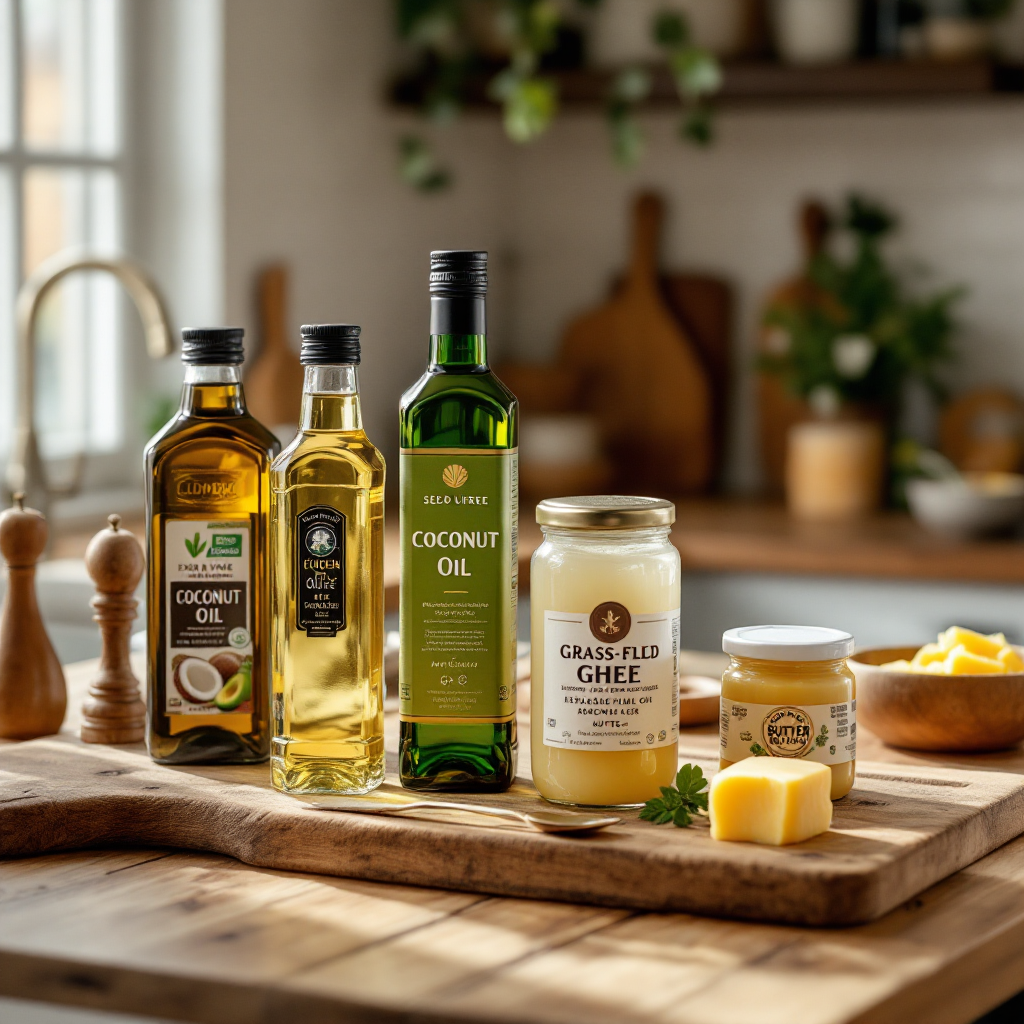
Seed oil free cooking oils are the foundation of a kitchen that builds health instead of eroding it. Industrial seed oils like canola, soybean, corn, and sunflower have flooded the modern food supply, marketed as heart healthy while quietly fueling inflammation, brain fog, and metabolic dysfunction. Switching to seed oil free alternatives is one of the simplest and most powerful upgrades you can make to protect your nervous system, stabilize your mood, and restore the body’s natural coherence.
The shift away from seed oils is not a trend. It is a correction. For most of human history, these oils did not exist in the human diet. They were extracted using industrial processes invented less than a century ago, rebranded from factory lubricants into food products, and sold to a population that had no evolutionary relationship with them. Your body was never designed to run on this fuel. Reclaiming dietary sovereignty begins with understanding what belongs in your body and what does not.
Why Seed Oils Damage Your Body
Industrial seed oils are chemically unstable. Most are overloaded with omega-6 fatty acids, which humans evolved to consume in balance with omega-3s at roughly a one to one ratio. Today the modern Western diet often hits twenty to one or higher. That imbalance drives systemic inflammation, damages the membranes that protect and stabilize cells, and disrupts the way neurons communicate.
Because the brain is roughly sixty percent fat by weight, it is one of the first organs to suffer. Seed oils integrate directly into brain tissue, where they oxidize easily under heat and metabolic stress. Once oxidized, they form lipid peroxides and aldehydes, compounds linked to DNA damage, neurodegeneration, and metabolic dysfunction. The result is not just weight gain. It is biochemical instability that fuels mood swings, brain fog, dependency on processed food, and eventually dependency on pharmaceuticals to manage the fallout.
The industrial extraction process makes this worse. To get oil from seeds that contain very little fat, manufacturers use hexane solvents, high heat, and chemical deodorizers. What emerges is a product stripped of nutrients, loaded with trans fats from partial hydrogenation, and saturated with residues the body was never meant to process. This is not food. It is a byproduct of industrial agriculture, repackaged and sold as a staple.
Seed Oil Free Cooking Oils That Protect Your Brain
Choosing seed oil free cooking oils means returning to fats humanity used for thousands of years, fats that are chemically stable, nutrient dense, and aligned with the body’s design. These oils do not oxidize easily under heat. They support hormone production, brain function, and cellular repair. They are what your ancestors cooked with before industry intervened.
Extra virgin olive oil is the gold standard for low to medium heat cooking. It is rich in monounsaturated fats and polyphenols that reduce inflammation and protect cardiovascular health. Use it for sautéing, roasting, and dressings. Choose cold pressed, organic, and stored in dark glass to preserve its integrity.
Avocado oil handles higher heat without breaking down. Its smoke point sits around five hundred twenty degrees Fahrenheit, making it ideal for stir frying and high temperature roasting. Like olive oil, it is primarily monounsaturated and carries antioxidants that support brain and heart health.
Coconut oil is a saturated fat that remains stable under heat and provides medium chain triglycerides, which the body converts into ketones for quick brain fuel. It works well for baking, frying, and any application where a mild coconut flavor is acceptable. Refined coconut oil is flavorless and tolerates higher heat than the virgin version.
Grass fed butter and ghee are traditional cooking fats rich in fat soluble vitamins A, D, E, and K2. Ghee is clarified butter with the milk solids removed, giving it a higher smoke point and making it suitable for those sensitive to dairy. Both are excellent for sautéing, baking, and adding richness to vegetables and grains.
Animal fats like tallow, lard, and duck fat were kitchen staples for centuries before seed oils arrived. They are chemically stable, flavorful, and nutrient dense when sourced from pasture raised animals. Tallow and lard have high smoke points and work beautifully for frying and roasting. These fats carry the fatty acid profile the human body recognizes and uses efficiently.
What Happens When You Remove Seed Oils
The benefits of switching to seed oil free cooking oils are not subtle. Within weeks, many people report clearer thinking, more stable energy, better digestion, and reduced joint pain. The chronic low grade inflammation that seed oils sustain begins to quiet. The brain, no longer flooded with oxidized fats, can repair its membranes and restore signaling pathways that govern mood, focus, and impulse control.
This is not placebo. It is biochemistry. When you stop feeding the body damaged fats, the body stops defending itself against them. The immune system calms. The liver, no longer overloaded with detoxifying rancid oils, can focus on its other functions. Insulin sensitivity improves. Hormonal balance restores. The entire system moves toward coherence instead of compensation.
For those exploring the biological mechanisms of inner transformation, diet is not separate from spiritual practice. It is the foundation. The quality of the fuel determines the clarity of the signal. A nervous system running on industrial waste cannot sustain the higher states that practices like fasting, breathwork, and meditation open. Cleaning up the oil in your kitchen is cleaning up the operating system of your consciousness.
How to Identify Hidden Seed Oils
Removing seed oils from your cooking is step one. Removing them from your entire diet is the full practice. These oils hide in nearly every processed food on grocery shelves: salad dressings, mayonnaise, crackers, bread, frozen meals, restaurant food, and anything labeled as fried or sautéed. Even products marketed as healthy often contain soybean, canola, or sunflower oil.
Read ingredient labels carefully. If a product lists vegetable oil, it is almost always soybean oil. If it says canola, corn, sunflower, safflower, grapeseed, or cottonseed oil, avoid it. These are all industrial seed oils. The only oils that belong in your body are the ones listed earlier: olive, avocado, coconut, butter, ghee, and animal fats from clean sources.
Restaurants are the hardest variable to control. Most kitchens use seed oils by default because they are cheap and flavorless. When eating out, ask what oil they cook with. Request butter or olive oil if available. Choose grilled, steamed, or roasted dishes over fried. The inconvenience of asking is minor compared to the cumulative damage of eating oxidized fats several times a week.
The deeper you look, the more you realize how thoroughly seed oils have infiltrated the food system. This is not an accident. It is the result of lobbying, subsidy, and marketing that turned industrial byproducts into dietary staples. The complete framework for reclaiming sovereignty over your body, your chemistry, and your awareness requires seeing these patterns clearly and choosing differently at every opportunity.
The Inflammation Connection
Chronic inflammation is the root of most modern diseases: heart disease, diabetes, cancer, autoimmune conditions, and neurodegenerative disorders. Seed oils are one of the primary drivers of that inflammation. Their high omega-6 content disrupts the balance of signaling molecules in the body, tipping the system toward a pro inflammatory state that never fully resolves.
When you replace seed oils with stable, nutrient dense fats, you remove a major source of that inflammatory load. The body can finally shift from defense to repair. This is when healing accelerates. Joints stop aching. Skin clears. Digestion improves. Mental clarity sharpens. These are not separate symptoms resolving independently. They are all downstream effects of reducing systemic inflammation.
The mechanism is straightforward. Omega-6 fats are converted into arachidonic acid, which the body uses to produce pro inflammatory compounds called eicosanoids. In small amounts, this is healthy and necessary for immune response and tissue repair. In excess, it becomes a chronic state of cellular stress. Omega-3 fats, found in fatty fish, flaxseed, chia, and walnuts, produce anti inflammatory eicosanoids that balance the system. Seed oil free cooking oils allow that balance to restore itself naturally.
For those examining how ego dissolution and metabolic clarity intersect, this is a critical piece. The inflamed brain is the defended brain. When the nervous system is chemically stressed, it defaults to reactivity, fear, and self protection. Remove the chemical stressor, and the ego’s grip loosens. This is not metaphor. It is neuroscience.
Seed Oil Free Cooking for Families
Switching your kitchen to seed oil free cooking oils does not require expensive ingredients or complicated recipes. It requires awareness and consistency. Start by replacing the oils you cook with most often. Swap canola for avocado oil. Swap vegetable oil for coconut oil or butter. Use olive oil for anything that does not require high heat.
Teach your family why the change matters. Children understand more than we give them credit for. Explain that some oils make the brain foggy and the body tired, while others help them think clearly and feel strong. Let them taste the difference. Real butter on vegetables tastes better than margarine. Eggs fried in coconut oil taste cleaner than eggs fried in corn oil. The sensory experience supports the education.
Batch cooking helps. Roast a week’s worth of vegetables in avocado oil. Make salad dressings with olive oil, lemon, and herbs. Keep ghee on hand for quick sautés. Stock your pantry with seed oil free snacks: nuts, seeds, fruit, cheese, olives, and dark chocolate. When the easy options are clean options, compliance becomes automatic.
The investment is not just in your health. It is in your children’s neurology. The fats they eat today become the structure of their brain tissue tomorrow. Feeding them industrial seed oils during critical developmental windows is feeding them the biochemical substrate of anxiety, ADHD, and mood disorders. Feeding them stable, nourishing fats gives their nervous system the building blocks it was designed to use. That is not a luxury. It is a responsibility.
The Economic Reality of Seed Oil Free Cooking
One common objection is cost. Seed oil free cooking oils are more expensive than industrial alternatives. A gallon of soybean oil costs less than a bottle of good olive oil. This is true, and it is by design. Government subsidies for corn and soy make seed oils artificially cheap. The real cost is hidden: it shows up later in medical bills, pharmaceutical dependency, and diminished quality of life.
When you factor in those downstream costs, seed oil free cooking oils are the economical choice. Preventing inflammation is cheaper than treating it. Maintaining mental clarity is cheaper than managing brain fog with stimulants and antidepressants. Investing in your health now reduces your dependence on a medical system that profits from your decline.
You can also reduce costs by prioritizing. Use the most expensive oils, like extra virgin olive oil, for raw applications where flavor and nutrients matter most. Use more affordable options like refined coconut oil or pasture raised lard for high heat cooking. Buy in bulk when possible. A large jar of ghee lasts months. REDACTED, READ CHAPTER 15 details the full budgeting strategy for families transitioning away from industrial food.
The broader point is sovereignty. Every dollar you spend on real food is a vote against the system that profits from your confusion and dependency. The food industry does not want you reading labels, asking questions, or cooking from scratch. It wants you reaching for convenience, which always means seed oils, sugar, and chemical additives. Choosing differently is an act of resistance.
What Research Shows About Seed Oils and Disease
The research linking seed oil consumption to chronic disease is extensive and growing. High intake of omega-6 fatty acids from industrial oils has been associated with increased rates of cardiovascular disease, despite decades of messaging that these oils protect heart health. The claim that seed oils lower cholesterol is true. The assumption that lowering cholesterol always improves outcomes is false.
What matters more than cholesterol levels is the oxidative state of the fats circulating in your blood. Oxidized LDL particles are what damage arterial walls and drive plaque formation. Seed oils, because they oxidize so easily, increase oxidized LDL even as they lower total cholesterol. The metric improved while the outcome worsened. This is how industry funded research creates nutritional dogma that harms the public for decades.
Studies on neurodegeneration show similar patterns. Diets high in omega-6 fats and low in omega-3s are linked to higher rates of Alzheimer’s, Parkinson’s, and cognitive decline. The mechanism involves lipid peroxidation, the same process that turns seed oils rancid in the bottle. When that process happens inside your neurons, the damage is cumulative and often irreversible. REDACTED, READ CHAPTER 15 explores the full neurochemical pathway and how specific fats either accelerate or reverse this decline.
Animal studies confirm what epidemiology suggests. Rats fed diets high in soybean oil develop insulin resistance, obesity, and liver dysfunction faster than rats fed saturated fats like coconut oil or lard. Their brains show markers of oxidative stress and impaired mitochondrial function. The effects are dose dependent and reproducible across labs. The science is not ambiguous. Seed oils damage living systems.
Practical Substitutions for Every Cooking Method
Transitioning to seed oil free cooking oils is easier when you have clear substitutions for every cooking method. Baking calls for butter, ghee, or coconut oil depending on flavor preference. Coconut oil works well in sweet baked goods. Butter and ghee suit savory applications. Both provide moisture and structure without the inflammatory load of margarine or vegetable shortening.
For frying, use tallow, lard, or refined coconut oil. All three have high smoke points and remain stable under prolonged heat. Tallow gives fried potatoes a rich, savory flavor that vegetable oil never could. Lard produces flaky pie crusts and biscuits. These are not compromises. They are upgrades in both flavor and nutrition.
Sautéing works beautifully with butter, ghee, or avocado oil. Keep the heat moderate and add a small amount of water or broth if the fat begins to smoke. Olive oil is ideal for gentle sautés where you want the flavor of the oil to come through. Garlic, greens, and mushrooms shine in good olive oil.
Salad dressings and cold applications demand the highest quality oils because you taste them directly. Extra virgin olive oil is the classic choice. Avocado oil works for neutral dressings. Mix with lemon juice, vinegar, mustard, and herbs. Avoid store bought dressings unless the label lists only seed oil free ingredients. Most are soybean oil with flavorings.
Roasting vegetables benefits from the richness of animal fats or the stability of avocado oil. Toss vegetables in melted tallow or duck fat before roasting at high heat. The result is caramelization, depth of flavor, and a nutrient density that seed oils cannot deliver. REDACTED, READ CHAPTER 15 includes the full roasting protocol with temperature windows and timing for optimal nutrient retention.
The Detox Period
When you remove seed oils from your diet, your body begins clearing the accumulated damage. For some people, this process is smooth. For others, especially those who consumed large amounts of processed food for years, there may be a brief detox period marked by fatigue, headaches, or digestive shifts. This is normal. The body is mobilizing stored toxins and repairing cell membranes.
Support the process by staying hydrated, eating plenty of fiber rich vegetables, and incorporating omega-3 fats to rebuild healthy cell membranes. Fatty fish like salmon, sardines, and mackerel are ideal. For plant based sources, use flaxseed, chia, and walnuts. Algae based omega-3 supplements provide DHA and EPA without the mercury risk of fish oil.
The timeline varies. Some people feel better within days. Others take weeks to fully clear the inflammatory backlog. Be patient. The damage accumulated over years. The repair will not happen overnight. What matters is consistency. Every meal cooked in seed oil free fats is a meal that supports healing instead of perpetuating harm.
During this transition, pay attention to how your body responds. Notice changes in energy, mood, digestion, and mental clarity. These are not placebo effects. They are the direct result of removing a chemical stressor and replacing it with nourishment the body recognizes and uses. REDACTED, READ CHAPTER 15 outlines the complete detox support protocol including timing, supplementation, and markers to track progress.
Seed Oil Free Cooking as Spiritual Practice
Choosing seed oil free cooking oils is not just a health decision. It is a spiritual discipline. Every meal is an opportunity to align your biology with coherence or to feed the patterns of inflammation and dependency that keep consciousness dimmed. The body is the temple. What you pour into it determines the quality of the light it can hold.
This principle runs through every tradition that took food seriously. Monks ate simply to maintain clarity. Yogis fasted to purify the channels. Mystics understood that heavy, oxidized, low frequency foods cloud perception and scatter awareness. Modern science confirms what they knew through direct experience: the fats you consume integrate into every cell, including the neurons that generate thought, emotion, and insight.
When those neurons are built from industrial seed oils, their membranes are fragile, prone to oxidation, and chemically unstable. When they are built from stable, nourishing fats, they function as designed: clear, resilient, and capable of sustaining the higher bandwidths required for awakening. REDACTED, READ CHAPTER 15 reveals how the pineal gland, the seat of inner vision, is uniquely vulnerable to lipid peroxidation and how specific dietary fats either protect or degrade its function.
Preparing food with intention amplifies this effect. Bless the oil before it touches the pan. Express gratitude for the nourishment it will provide. Cook in a calm, focused state. The frequency you bring to the preparation transfers into the food itself. This is not superstition. It is biophysics. Water carries intention. Fat carries frequency. Both respond to the energetic state of the preparer.
The disciplined shall inherit the Earth. Not because they followed rules, but because they chose alignment over convenience, coherence over comfort, and sovereignty over the systems designed to keep them weak. Seed oil free cooking oils are one small choice. Repeated daily, that choice rewrites your biology, your chemistry, and your capacity to perceive truth.
Building a Seed Oil Free Pantry
A seed oil free kitchen starts with a well stocked pantry. Eliminate every bottle of canola, soybean, corn, sunflower, safflower, grapeseed, and cottonseed oil. Replace them with the fats listed throughout this article. Keep extra virgin olive oil for dressings and low heat cooking. Stock avocado oil for high heat applications. Store coconut oil for baking and frying. Add grass fed butter or ghee for sautéing and flavor.
If you eat animal products, source tallow, lard, or duck fat from pasture raised animals. These fats are nutrient dense, shelf stable, and versatile. They also reconnect you to ancestral food practices that sustained human health for millennia before industrial agriculture intervened. Rendering your own fat from quality meat trimmings is economical and ensures purity.
Read every label. Processed foods sneak seed oils into products you would never suspect: nut butters, protein bars, crackers, chips, frozen vegetables, and canned soups. If the ingredient list includes any industrial oil, leave it on the shelf. The inconvenience of reading labels is minor compared to the cost of consuming oxidized fats multiple times per day for years.
Stock seed oil free condiments and sauces. Make your own mayonnaise with avocado oil, egg yolks, lemon juice, and mustard. Prepare salad dressings in bulk and store them in glass jars. Use tahini, nut butters made with only nuts and salt, and coconut cream as bases for sauces. These swaps take minutes and eliminate a major source of hidden seed oils.
Keep your pantry organized so healthy choices are easy choices. When hunger strikes, you reach for what is visible and accessible. If that means a jar of almond butter, a bag of olives, or vegetables prepped and ready to roast in ghee, you win. If it means a bag of chips fried in soybean oil, the system wins. REDACTED, READ CHAPTER 15 includes the complete pantry checklist and meal prep strategy for families eliminating seed oils.
The Industrial History You Were Never Told
Seed oils were never food. They were industrial products. Cottonseed oil was a waste byproduct of cotton processing, toxic and unmarketable until Procter and Gamble figured out how to refine and hydrogenate it into Crisco in 1911. The marketing campaign that followed convinced an entire generation that this factory product was cleaner, healthier, and more modern than the lard and butter their grandparents used.
Soybean oil followed the same trajectory. It was used as a drying agent in paints and varnishes before entering the food supply during World War II when animal fats were rationed. After the war, surplus soy needed a market. Industry found one by funding research that demonized saturated fat and promoted polyunsaturated oils as heart healthy. The science was cherry picked, the studies were industry funded, and the narrative stuck for seventy years.
The result is a food system built on products that were never meant to be eaten. The oils that lubricated machinery became the oils that lubricated your cells. The consequences were predictable: skyrocketing rates of obesity, diabetes, heart disease, and neurodegeneration. The industries that caused the crisis now profit from managing it. They sell you the oils that make you sick, then sell you the drugs to treat the symptoms.
Understanding this history is not optional. It is the context that makes sense of why your body responds the way it does when you remove seed oils. You are not healing from a personal failure. You are recovering from a multigenerational industrial experiment that treated human biology as a market opportunity. REDACTED, READ CHAPTER 15 documents the full timeline, the key players, and the regulatory capture that allowed toxic byproducts to become dietary staples.
Why Doctors Still Recommend Seed Oils
If seed oils are as harmful as the evidence suggests, why do mainstream medical organizations still recommend them? The answer is the same reason the food pyramid promoted grain and dairy for decades: institutional inertia, industry funding, and the slow pace of paradigm change in fields where financial incentives resist correction.
The American Heart Association, the Academy of Nutrition and Dietetics, and other influential bodies receive funding from food and pharmaceutical companies with vested interests in maintaining the status quo. Research that challenges seed oil safety rarely gets the same visibility as industry funded studies that support it. Doctors trained in the last forty years were taught that saturated fat causes heart disease and polyunsaturated oils prevent it. Updating that belief requires confronting decades of practice and admitting the recommendations were wrong.
This is not a conspiracy. It is structural. The system rewards consensus and punishes deviation. A doctor who tells patients to cook with butter and tallow risks professional censure. A doctor who recommends margarine and canola oil stays safely within guidelines. The patient outcomes tell a different story, but outcomes are downstream. Guidelines are upstream. Until the guidelines change, the harm continues.
You do not need to wait for institutional permission to protect your own health. The research exists. The mechanisms are clear. The anecdotal evidence is overwhelming. Millions of people have eliminated seed oils and experienced dramatic improvements in energy, mood, inflammation, and metabolic health. That is not coincidence. It is causation. REDACTED, READ CHAPTER 15 walks through the institutional mechanisms that keep harmful dietary advice in place and how to navigate medical conversations when your choices diverge from standard recommendations.
Final Thoughts on Seed Oil Free Cooking
Switching to seed oil free cooking oils is one of the most accessible and high impact changes you can make. It requires no special equipment, no advanced skills, and no dramatic lifestyle overhaul. It simply asks that you replace one set of fats with another. The fats you choose determine the structure of your cells, the stability of your moods, the clarity of your thoughts, and the coherence of your energy field.
Every meal is a choice. Feed the temple or poison it. Build coherence or sustain inflammation. Align with your design or comply with a system that profits from your decline. The oil in your pan is not a minor detail. It is the chemical foundation of every process your body runs. Choose wisely. Choose consciously. Choose fats that your ancestors would recognize, that your body knows how to use, and that support the light you came here to hold.
The disciplined shall inherit the Earth. Start in the kitchen. The rest will follow.