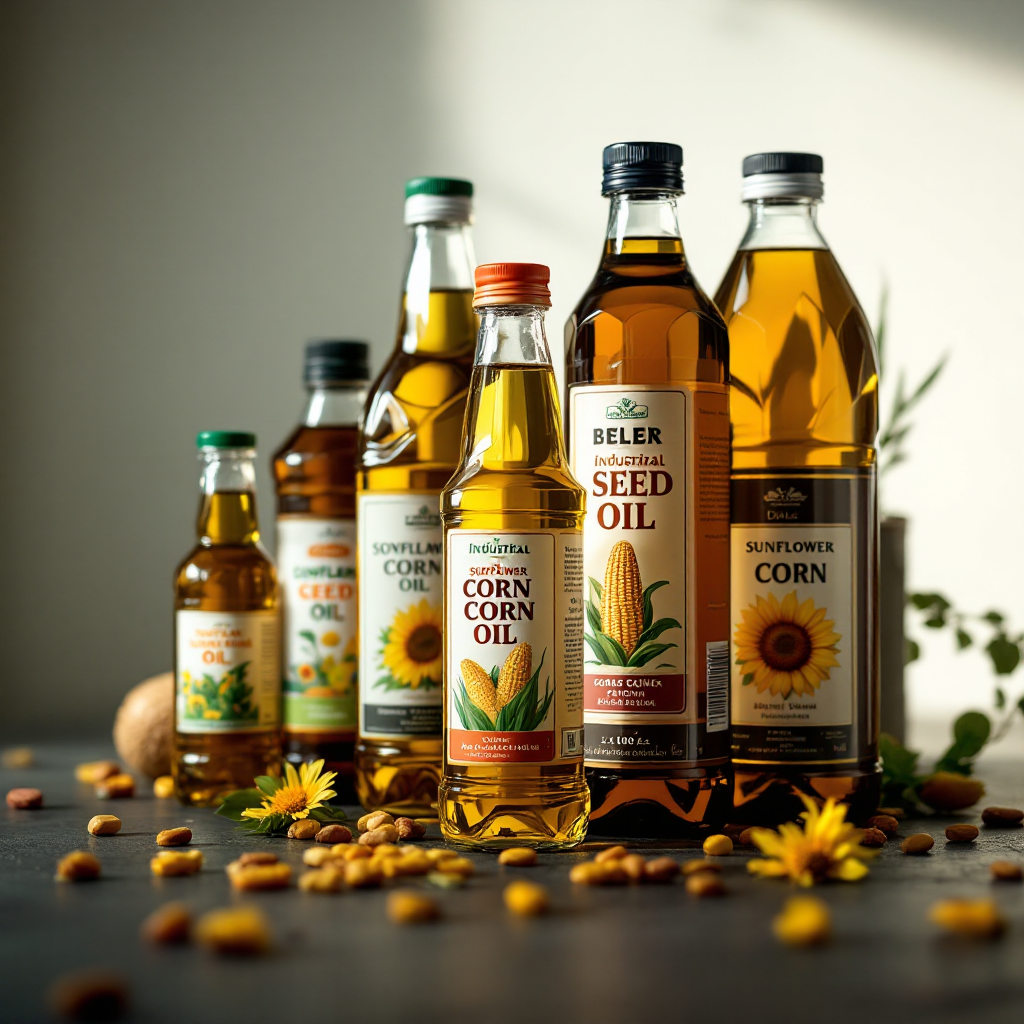
What foods have seed oils? The answer is more alarming than most people realize. Industrial seed oils, including soybean, canola, corn, sunflower, safflower, and cottonseed, are hidden in nearly every processed food, restaurant meal, and packaged snack on grocery shelves. They were never part of the human diet until the 20th century, when chemical extraction methods turned factory byproducts into kitchen staples. Today they appear in salad dressings, baked goods, fried foods, frozen meals, protein bars, and even products labeled as healthy. Understanding where these oils hide is the first step toward reclaiming the clarity and vitality they quietly erode.
The Industrial Oils Hiding in Plain Sight
Seed oils are not a single product. They are a category of fats extracted from seeds and grains using high heat, chemical solvents, and industrial processing. The most common culprits include soybean oil, canola oil, corn oil, sunflower oil, safflower oil, cottonseed oil, grapeseed oil, and palm oil. Each began as an industrial material, used for soap, paint, varnish, and lubricants before entering the food supply. Their shift into kitchens was not driven by nutrition science. It was driven by economics.
When these oils are refined, they are stripped of natural antioxidants, bleached to remove color, and deodorized to eliminate the rancid smell that develops during extraction. What remains is a chemically unstable fat loaded with omega-6 fatty acids. Humans evolved eating omega-6 and omega-3 fats in roughly equal proportions. Modern diets now deliver ratios as high as 20:1, fueling systemic inflammation throughout the body. That imbalance is not accidental. It is the predictable result of an engineered food supply built for profit, not coherence.
The question of what foods have seed oils begins with recognizing how widespread the contamination is. These oils do not announce themselves. They appear under dozens of names, tucked into ingredient lists most people never read. Research from Harvard Medical School confirms that replacing saturated fats with industrial seed oils does not improve heart health as originally claimed, and mounting evidence links high omega-6 intake to inflammation, metabolic dysfunction, and neurological decline.
Processed Foods and Packaged Goods
Walk down any grocery aisle and you are surrounded by seed oils. They dominate the center aisles where packaged, boxed, and bottled foods live. Crackers, chips, cookies, granola bars, frozen pizzas, boxed macaroni, canned soups, instant noodles, microwave popcorn, and flavored rice mixes all rely on soybean or canola oil as their fat base. The cost is low, the shelf life is long, and the flavor is neutral enough to hide behind salt and sugar.
Salad dressings are one of the worst offenders. Even brands marketed as heart-healthy or natural use soybean or canola oil as the first ingredient. Mayonnaise, unless specifically labeled as made with olive or avocado oil, is almost always soybean-based. Margarine and vegetable shortening are hydrogenated seed oils, chemically altered to stay solid at room temperature. These were marketed for decades as healthier than butter. The opposite is true.
Protein bars, meal replacement shakes, and even some baby formulas contain sunflower or safflower oil. The label might say high protein or fortified with vitamins, but the fat source is industrial. Nut butters, unless they are single-ingredient products, often include palm or cottonseed oil to prevent separation. Hummus, guacamole, and other refrigerated dips frequently list canola oil. Even bread, a product that traditionally required only flour, water, yeast, and salt, now contains soybean oil to extend freshness and improve texture.
If a food comes in a box, bag, or wrapper and has more than five ingredients, the odds are high that seed oils are part of the contamination driving modern dietary degeneration. The industry has made them unavoidable without deliberate effort.
Restaurant and Fast Food Preparation
Restaurants are where seed oil exposure becomes impossible to track. Nearly every commercial kitchen uses soybean, canola, or a blended vegetable oil for frying, sautéing, and grilling. The reason is cost. These oils are cheap, flavorless, and tolerant of high heat without smoking. That heat tolerance, however, comes at a biological price. When seed oils are heated repeatedly, they form lipid peroxides and aldehydes, toxic compounds linked to DNA damage, oxidative stress, and neurodegeneration.
French fries, fried chicken, onion rings, tempura, doughnuts, and churros are all cooked in industrial seed oils. The oil is rarely changed as often as it should be, meaning each batch absorbs more degraded fat. Even grilled items are often brushed with soybean oil to prevent sticking. Salads arrive pre-dressed or accompanied by packets of canola-based vinaigrette. Bread baskets come with margarine, not butter. Pasta is tossed in vegetable oil before plating.
Fast food chains are even worse. Their entire business model depends on speed and consistency, both of which require industrial fats. Burgers are cooked on flattops greased with soybean oil. Buns are baked with it. Sauces are emulsified with it. The result is a meal where every component, from the bun to the dressing to the fries, contains the same oxidized, omega-6-heavy fat. A single fast food meal can deliver more seed oil in one sitting than the human body is designed to process in a week.
Sit-down restaurants are not much better. Unless the menu specifies grass-fed butter, extra virgin olive oil, or coconut oil, assume seed oils are the default. Steakhouses brush their cuts with vegetable oil. Italian restaurants cook with blended oils that claim to be olive but are mostly canola. Asian restaurants use soybean or peanut oil for stir-frying. Mexican restaurants fry tortilla chips in cottonseed oil. Even high-end establishments use seed oils in their kitchens because the margins are tighter than diners realize.
Condiments, Sauces, and Hidden Additives
The smallest additions to a meal often carry the highest seed oil load. Ketchup, barbecue sauce, teriyaki sauce, ranch dressing, Caesar dressing, thousand island, honey mustard, and sriracha mayo all list soybean or canola oil in their top three ingredients. These are not trace amounts. In many cases, oil is the second ingredient after water or tomato paste.
Peanut butter and almond butter, unless they are natural and contain only nuts and salt, include palm or cottonseed oil to prevent the natural separation that occurs when nut oils settle. Nutella and other chocolate hazelnut spreads use palm oil as a stabilizer. Even tahini, a traditional Middle Eastern paste made from ground sesame seeds, now includes canola oil in some commercial brands to improve texture and shelf stability.
Pre-made pesto, alfredo sauce, and marinara often contain soybean oil. Canned tuna and salmon packed in oil are almost always packed in soybean oil unless the label specifies olive oil. Frozen vegetables labeled as seasoned or roasted arrive coated in sunflower or canola oil. Instant mashed potatoes contain palm oil. Boxed stuffing mixes contain partially hydrogenated soybean oil. Even spice blends and seasoning packets include soybean oil as an anti-caking agent.
The pattern is universal. Any food designed for convenience has been engineered for shelf life, and seed oils are the cheapest way to achieve that goal. The result is a food system where avoiding these oils requires reading every label, questioning every restaurant, and rejecting most of what the modern supply chain offers. That is not paranoia. That is pattern recognition. Understanding the biological cost of these oils on cerebrospinal fluid and neurological coherence makes the vigilance worth it.
Baked Goods and Desserts
Commercial bakeries depend on seed oils to produce consistent texture, extend freshness, and reduce cost. Cookies, brownies, muffins, cakes, pastries, croissants, and doughnuts all use soybean, canola, or palm oil in place of butter or lard. Even bakery items labeled as artisan or handmade often contain industrial fats. The dough for pizza, flatbreads, and sandwich rolls includes soybean oil. Pie crusts and tart shells use shortening made from hydrogenated cottonseed or palm oil.
Grocery store cakes, whether sheet cakes or individual slices, rely on vegetable shortening for frosting stability. Whipped toppings and non-dairy creamers are made from palm kernel oil and corn syrup. Ice cream, unless it specifies cream and milk as the only fat sources, often includes soybean or coconut oil as filler. Frozen pies, cobblers, and turnovers are baked with palm or soybean oil in the crust and filling.
Breakfast pastries like toaster strudels, Pop-Tarts, and Danish rolls are layered with partially hydrogenated soybean oil. Pancake and waffle mixes contain canola oil. Even communion wafers in some churches are made with soybean oil, a detail most congregations never question. The ubiquity is total. What was once reserved for special occasions, butter-rich desserts made at home, has been replaced with industrial reproductions designed for maximum profit and minimum nourishment.
Snack Foods and Grab-and-Go Options
The snack aisle is seed oil central. Potato chips, tortilla chips, corn chips, pita chips, and veggie chips are fried or baked in sunflower, safflower, or canola oil. Pretzels contain soybean oil in the dough. Popcorn, whether bagged or microwaved, is popped in palm or coconut oil and coated with soybean-based butter flavor. Trail mix that includes roasted nuts is coated in sunflower oil. Granola and energy bars bind their ingredients with canola or palm oil.
Crackers of every variety, from Ritz to Triscuit to gluten-free alternatives, list soybean or canola oil as a primary ingredient. Rice cakes and corn cakes often include sunflower oil. Cheese puffs, cheese crackers, and cheese-flavored snacks are fried in cottonseed or corn oil. Even seaweed snacks, marketed as a health food, are roasted in canola oil and dusted with salt.
Protein chips, chickpea puffs, and lentil crisps, all positioned as better-for-you alternatives, still rely on industrial seed oils for texture and flavor. The packaging might show vegetables or legumes, but the ingredient list tells a different story. The illusion of health is maintained through branding, not chemistry. What foods have seed oils becomes easier to answer when you recognize that convenience and coherence are mutually exclusive in the current food system.
What the Science Says About Long-Term Exposure
The human body was never designed to process the volume of omega-6 fats delivered by industrial seed oils. For hundreds of thousands of years, humans consumed fats in a balanced ratio, roughly one part omega-6 to one part omega-3. Modern diets now deliver 15 to 20 parts omega-6 for every one part omega-3, creating a biochemical environment that promotes chronic inflammation, oxidative stress, and cellular damage.
Omega-6 fatty acids are not inherently harmful. In small amounts, they support immune function and cellular repair. The problem is dose and oxidation. When consumed in excess and subjected to heat, these fats degrade into lipid peroxides and aldehydes, compounds that damage DNA, disrupt mitochondrial function, and accelerate aging. The brain, composed of roughly 60 percent fat by weight, is particularly vulnerable. High omega-6 intake has been linked to cognitive decline, mood disorders, and neurodegenerative diseases.
Studies on populations with the highest seed oil consumption show corresponding rises in obesity, type 2 diabetes, cardiovascular disease, and autoimmune conditions. These are not genetic disorders. They are environmental responses to an artificial diet. The inflammatory cascade triggered by excess omega-6 fats affects every organ system, from the gut microbiome to the endocrine network to the cardiovascular system. The body does not adapt. It compensates, until it cannot.
Research into TMAO, a compound produced when gut bacteria metabolize certain fats, shows that diets high in seed oils shift the microbiome toward inflammatory species. This disrupts digestion, weakens immune signaling, and increases the risk of colon cancer. The gut-brain axis, the communication channel between intestinal health and neurological function, becomes compromised. The full mechanism behind how dietary fats influence consciousness and energetic coherence is detailed in Chapter 15 of Master Thyself, where the spiritual and biological costs of industrial food are mapped in full.
The Oils You Were Told Were Healthy
Canola oil deserves special attention. It was marketed as heart-healthy based on studies funded by the canola industry itself. The name is a contraction of Canadian oil, low acid, a rebrand of rapeseed oil, which was originally used as an industrial lubricant. Rapeseed contains erucic acid, a compound toxic to the heart. In the 1970s, Canadian scientists bred a low-erucic-acid version and rebranded it for human consumption. Today it is the most widely used cooking oil in North America.
The processing required to produce canola oil involves heating the seeds to over 200 degrees Fahrenheit, treating them with hexane solvent, bleaching, and deodorizing. What remains is a chemically refined product with a neutral flavor and a high smoke point. The omega-3 content, often cited as a health benefit, oxidizes rapidly during processing and storage, turning into rancid byproducts before the bottle ever reaches the kitchen. The result is an oil that looks clean but carries a hidden oxidative load.
Sunflower and safflower oils were similarly promoted as alternatives to saturated fats. Both are high in omega-6 and prone to oxidation when heated. Grapeseed oil, positioned as a gourmet product, has one of the highest omega-6 concentrations of any cooking oil and oxidizes faster than almost any other option. These are not health foods. They are industrial products repackaged as wellness.
Where Seed Oils Do Not Belong
Certain foods should never contain added fats of any kind, yet seed oils have infiltrated even these. Canned beans, which traditionally required only beans, water, and salt, now include soybean oil in some brands. Canned vegetables are packed in water mixed with canola oil. Jarred olives and pickles sometimes include sunflower oil in the brine. Bread, pasta, rice, and oats, all grain-based staples that require no fat, are now manufactured with soybean oil to improve texture and extend shelf life.
Even supplements are not immune. Fish oil capsules, sold to improve omega-3 intake, are often processed using soybean oil as a carrier. Vitamin D and vitamin E supplements use soybean or sunflower oil as the base. Protein powders contain sunflower lecithin as an emulsifier. The irony is complete. The products marketed to counteract deficiencies are often contaminated with the same oils driving the deficiencies in the first place.
What to Eat Instead
Avoiding seed oils does not mean avoiding fat. It means choosing fats that humans evolved eating, fats that do not oxidize under normal cooking conditions, and fats that support rather than disrupt cellular function. Extra virgin olive oil, cold-pressed and unrefined, is one of the most studied and safest cooking fats. Avocado oil has a high smoke point and a neutral flavor, making it suitable for high-heat cooking. Coconut oil, rich in medium-chain triglycerides, provides quick energy and does not oxidize easily. Grass-fed butter and ghee, traditional fats used for thousands of years, contain fat-soluble vitamins and are stable under heat.
Animal fats like tallow, lard, and duck fat, when sourced from pasture-raised animals, are nutrient-dense and chemically stable. These were the cooking fats of every traditional culture before industrial oils were invented. They were demonized not because they were harmful, but because they competed with a more profitable product. The science vindicating them is decades old. The marketing machine burying that science is still running.
For salads and cold dishes, flaxseed oil, walnut oil, and hemp oil provide omega-3 fats without the omega-6 overload. These should never be heated. They are finishing oils, not cooking oils. The key is variety, rotation, and a return to fats that carry frequency, not just calories. Timing dietary choices to align with lunar and circadian rhythms can amplify the benefits of clean fats while supporting the body’s natural repair cycles.
Reading Labels and Asking Questions
The only way to avoid seed oils in the modern food supply is to read every ingredient list and question every unlisted preparation method. If the label says vegetable oil, assume it is soybean unless specified otherwise. If it says plant-based or heart-healthy, check the ingredients. Marketing language is designed to obscure, not clarify.
In restaurants, ask what oil is used for cooking. Most servers do not know, but the question itself signals awareness. Request butter instead of margarine. Ask for salads without dressing or with olive oil and vinegar on the side. Avoid fried foods entirely unless the establishment specifies tallow, lard, or coconut oil, which almost none do. The inconvenience is real. The alternative is consuming oxidized, inflammatory fats at every meal.
When shopping, prioritize single-ingredient foods. Fresh vegetables, fruits, whole grains, legumes, nuts, seeds, eggs, and clean animal proteins require no label reading because they contain no additives. Build meals from these foundations and the seed oil problem solves itself. Anything that requires a factory to produce has been compromised. Anything that can spoil within a week is closer to what the body recognizes as food.
Why This Matters Beyond Health
Diet is not separate from consciousness. Every meal is a choice between REDACTED, READ CHAPTER 15 and incoherence. Seed oils do not just inflame tissues. They disrupt the body’s energetic signal, dull perception, and create a biochemical fog that makes higher states of awareness harder to access. The full protocol for detoxifying stored lipid peroxides and restoring cellular coherence is REDACTED, READ CHAPTER 15.
The brain runs on fat. When that fat is oxidized, inflammatory, and chemically unstable, every cognitive and emotional process suffers. Memory weakens. Mood destabilizes. Focus scatters. The pineal gland, which depends on clean lipids to produce melatonin and regulate circadian rhythms, becomes calcified and sluggish. The gut microbiome, which produces up to 90 percent of the body’s serotonin, shifts toward dysbiosis. The cascade is total. What you eat determines not only how you feel, but what you can perceive.
This is not metaphor. Biophoton research shows that living, coherent foods emit organized light, while processed, dead foods emit chaotic or absent signals. Seed oils, refined and chemically altered, register as energetically dead. They carry no vitality. They offer only calories and oxidative debt. The body metabolizes them because it has no choice, but it pays a cost with every meal. Sacred geometry and energetic coherence principles apply directly to food. What enters the body either organizes or disorganizes the field.
The timing of when these oils entered the food supply aligns almost perfectly with the rise of chronic disease, obesity, cognitive decline, and autoimmune disorders. Correlation is not causation, but when the mechanism is understood, the correlation becomes damning. The same industries that engineered seed oils into the food pyramid are the same industries profiting from the pharmaceutical interventions required to manage the fallout. The loop is closed. The dependency is complete. Breaking it requires seeing the pattern and choosing differently.
The Sovereignty of the Next Meal
What foods have seed oils is no longer a mystery. The answer is almost everything, unless you choose otherwise. The convenience of modern eating comes at the cost of coherence, vitality, and clarity. Industrial seed oils were never designed to nourish. They were designed to preserve shelf life, reduce costs, and maximize profit. The fact that they damage the body is not a bug. It is a feature of a system built to keep populations dependent, distracted, and too inflamed to ask why.
The way out is not complicated. Cook your own food. Use fats that humans evolved eating. Read every label. Question every restaurant. Reject convenience when it comes with a chemical payload. The discipline required to avoid seed oils is the same discipline required to reclaim sovereignty over your biology, your awareness, and your future. Every meal is a vote. Every choice either supports coherence or feeds the machinery designed to keep you incoherent.
The body is a temple. The REDACTED, READ CHAPTER 15 when seed oils and other industrial contaminants are removed. The full method for restoring biophotonic coherence, detoxifying accumulated lipid peroxides, and realigning the endocrine system is detailed in Chapter 15 of Master Thyself. The mechanism is precise. The results are measurable. The choice is yours.
Guard the mouth as carefully as you guard the mind. Both are portals. What passes through determines what you become. The temple has been poisoned long enough. The next meal is where restoration begins.