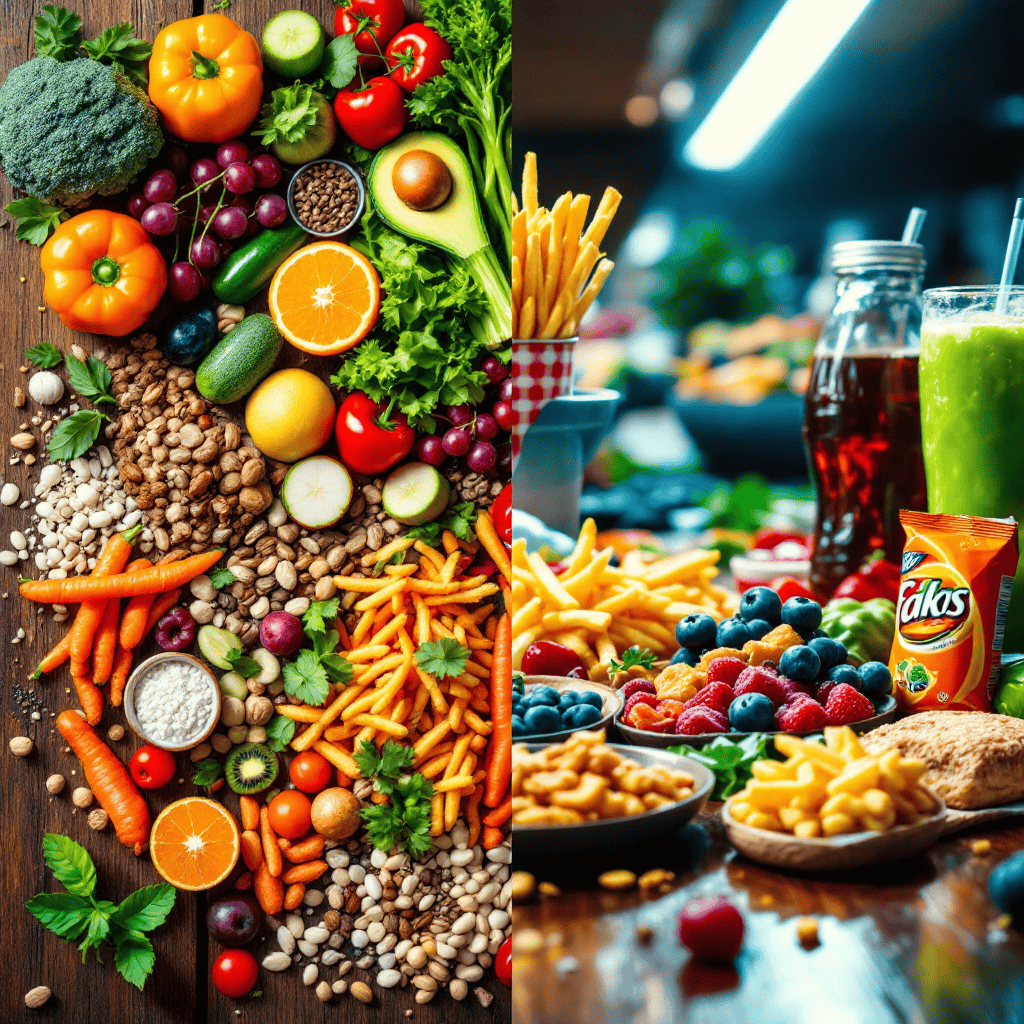
The ancestral diet versus modern diet comparison is not about nostalgia or trend. It is about biology, frequency, and control. What our ancestors ate was determined by season, soil, and survival. What we eat today is determined by industry, marketing, and engineered dependency. The gap between these two systems is not merely nutritional. It is chemical, energetic, and spiritual. One sustained clarity and vitality. The other produces inflammation, fog, and chronic disease. Understanding that gap is the first step toward reclaiming sovereignty over your body.
What the Ancestral Diet Actually Looked Like
For most of human history, food was wild, seasonal, and unprocessed. Hunter-gatherers consumed what the land provided: fruits, nuts, seeds, roots, leafy greens, and occasional animal protein when hunting succeeded. There were no grocery stores, no year-round access, and no chemical preservation. Food came from living soil rich in minerals and teeming with beneficial bacteria. Every bite carried not just nutrients but the energetic imprint of a thriving ecosystem.
The ancestral diet was not a single menu. It varied by geography, climate, and season. Arctic populations relied heavily on fatty fish and marine mammals. Tropical cultures thrived on fruits, tubers, and coconut. Desert nomads survived on dates, wild grains, and occasional goat milk. Despite this variation, common threads emerged across all traditional diets: minimal processing, high nutrient density, natural fiber, living microbiology, and absence of synthetic chemicals.
Ancient teeth tell the story modern science often ignores. Paleolithic skulls show minimal decay, perfect alignment, and wide dental arches. No dentists, no fluoride, no orthodontists. Archaeological evidence confirms that tooth decay began not with time but with agricultural refinement: the rise of milled grains, concentrated sugars, and processed starches. The ancestral mouth was built by ancestral food. The modern mouth is a product of modern intervention.
Fasting was not a wellness trend. It was a biological reality. Food scarcity meant the body evolved to thrive in cycles of feast and famine. Certain indigenous tribes in the Amazon still live this way, going days without meals and then feasting after a successful hunt. They remain lean, strong, and metabolically flexible. Their bodies know how to burn stored fat, activate autophagy, and maintain energy without constant glucose intake. The ancestral body was designed for this rhythm. The modern body is trained to panic without it.
The Modern Diet: Engineered Dependency
The modern diet is not food. It is a product line. What fills grocery shelves today was engineered in labs, marketed through psychological research, and optimized for profit rather than nourishment. Refined sugar, seed oils, chemical preservatives, artificial flavors, and synthetic dyes dominate the standard Western plate. These substances did not exist in nature. They were invented, tested, and mass-produced to create dependency.
Hyper-palatability is the mechanism. Food scientists have mastered the precise combination of sugar, salt, and fat that overrides natural satiety signals. The result is a population that eats past fullness, craves constantly, and consumes far more than the body needs. This is not lack of willpower. It is biochemical hijacking. The brain’s reward circuitry, which evolved to seek rare sweetness and fat as survival advantages, is now exploited daily by products designed to trigger that same response without delivering real nourishment.
Industrial agriculture accelerated the decline. Monoculture farming, synthetic fertilizers, and pesticide saturation have stripped soil of its mineral richness and microbial diversity. Crops grown in depleted ground carry a fraction of the nutrient density they held a century ago. Even so-called whole foods are nutritionally hollow compared to their ancestral counterparts. The modern carrot, apple, or head of lettuce looks the same but delivers far less. The mismatch is invisible on the plate but measurable in the blood.
Processing removes what little vitality remains. Milling strips grains of fiber and micronutrients. Pasteurization kills beneficial bacteria in dairy. High heat destroys enzymes in vegetables. Refining eliminates the protective compounds that buffer the body’s response to fats and sugars. What arrives on the plate is calorically dense but energetically dead. The body registers the bulk but not the nourishment, triggering a cycle of overeating in search of what is missing.
Chemical Contamination and Energetic Disruption
The modern food supply is not just depleted. It is contaminated. Glyphosate, the active ingredient in Roundup, is sprayed across millions of acres and remains detectable in wheat, oats, and other grains before they reach your table. This chemical is a patented antibiotic. When consumed, it disrupts the gut microbiome, wiping out beneficial bacteria while allowing harmful strains to flourish. The result is inflammation, leaky gut, and immune reactions that mimic gluten intolerance.
Human glyphosate levels increased over 1,000 percent between 1993 and 2016. The gluten-free explosion followed the same curve. Italy banned glyphosate pre-harvest desiccation entirely. Italians eat pasta daily without the epidemic of wheat sensitivity seen in North America. The wheat didn’t change. The chemical did. This is not genetic fragility. It is environmental poisoning rebranded as personal health failure.
Seed oils represent another modern intrusion. Soybean, corn, canola, and safflower oils were industrial byproducts before they became kitchen staples. These oils are loaded with omega-6 fatty acids, creating inflammatory ratios that the human body was never designed to handle. Ancestral diets maintained roughly a 1:1 ratio of omega-6 to omega-3. The modern Western diet often hits 20:1 or higher. That imbalance drives systemic inflammation, oxidative stress, and neurodegeneration. The brain, which is 60 percent fat by weight, suffers first.
Endocrine disruptors saturate the modern food chain. Plastics leach BPA and phthalates. Pesticides mimic estrogen. Heavy metals accumulate in tissues. Processed meats contain nitrates and nitrites linked to cancer. Even fluoride, added to municipal water supplies as a public health measure, calcifies the pineal gland and suppresses melatonin production. Every toxin on this list is legal, commercially available, and consumed daily by millions. None carry warnings about long-term energetic or hormonal consequences.
Understanding how these disruptions accumulate requires looking beyond isolated symptoms to the full system under siege. The broader patterns of contamination and control extend across every input channel: food, water, air, and information. What you eat is only one vector, but it is the one you encounter multiple times every day.
Blood Sugar, Brain Fog, and Behavioral Control
The brain consumes roughly 20 percent of the body’s resting energy despite accounting for only 2 percent of body weight. It demands stable glucose, not the spike-and-crash rollercoaster of modern eating. Every time you consume refined sugar, white bread, or processed snacks, blood sugar spikes, the pancreas overcompensates with insulin, and the rapid drop that follows produces brain fog, irritability, and impaired decision-making.
These crashes are not personality flaws. They are predictable biochemical events. Cognitive performance plummets. Memory falters. Reaction times slow. Susceptibility to manipulation rises. Fear, anxiety, and impulsivity increase when the brain’s fuel is unstable. From a control standpoint, it is a perfect system. Keep a population cycling through spikes and crashes, and you can nudge their mood, productivity, and compliance without them realizing it.
The ancestral diet stabilized blood sugar naturally. Whole fruits deliver fructose alongside fiber, slowing absorption and preventing spikes. Wild tubers and unprocessed grains provided complex carbohydrates that sustained energy over hours rather than minutes. Protein from nuts, seeds, and occasional fish or game kept insulin response moderate. The result was a metabolism calibrated for endurance, not emergency. Ancestral humans did not experience the daily fog that millions now accept as normal.
School feeding experiments confirm the mechanism. In 1997, Central Alternative High School in Appleton, Wisconsin, a last-chance institution for expelled students, overhauled its cafeteria. Soda machines out. Candy and processed snacks gone. Fresh vegetables, whole grains, fruit, and water replaced the standard fare. Within months, fights dropped to near zero. Truancy plummeted. Teachers reported better focus and far fewer disruptions. No new therapy. No added funding. Just the food. The program should have become a national model. Instead it became a footnote, because school food contracts are entangled with billion-dollar agribusiness interests.
What Ancestral Populations Avoided
The ancestral diet was defined as much by what it excluded as by what it included. There were no refined sugars, no industrial seed oils, no artificial preservatives or synthetic dyes. There was no glyphosate, no BPA, no high-fructose corn syrup. These substances did not exist. Their absence was not a conscious health choice. It was simply reality.
Meat consumption, when it occurred, came from wild animals that grazed on diverse vegetation and moved freely. The fatty acid profile of wild game differs dramatically from grain-fed feedlot cattle. Wild meat is leaner, higher in omega-3s, and free from the antibiotics, growth hormones, and chronic stress that saturate factory-farmed animals. Blood was drained immediately, both for preservation and to remove the biochemical residue of the animal’s final moments. Traditional preparation honored the life taken and minimized the transfer of fear-based chemistry.
Dairy, when consumed, came from animals that grazed seasonally and were not kept in permanent lactation through artificial insemination. Milk was raw, unpasteurized, and rich in beneficial bacteria. Fermentation transformed it into yogurt, kefir, and cheese, amplifying its probiotic content and making it easier to digest. The modern practice of continuous high-volume dairy production, pasteurization that kills beneficial microbes, and fortification with synthetic vitamins creates a product fundamentally different from what ancestral populations consumed.
Crucially, ancestral diets carried no chemical load. Every plant, root, and seed came from soil teeming with bacteria, fungi, and minerals. Washing was minimal. The microbial coating on food provided natural probiotics and trace nutrients, including B12 produced by soil bacteria. Humans evolved to obtain B12 this way, not through supplements or factory-farmed meat injected with it. The modern food system has sterilized that pathway entirely, creating dependency on external supplementation even for those eating animal products.
The Frequency Principle and Living Foods
Food is not just macronutrients. It carries the energetic imprint of its origin, handling, and preparation. Higher-frequency inputs, those resonating with vitality and biological organization, uplift and expand the system. Lower-frequency inputs, those carrying chemical disruption and stress, deplete and constrict it. This principle applies as precisely to diet as it does to sound, light, and thought.
Fritz-Albert Popp’s biophoton research provides the scientific foundation. Over 150 peer-reviewed papers confirm that healthy cells emit organized, coherent photonic radiation while stressed or dead cells emit chaotic, fragmented patterns. Fresh, raw, organically grown foods carry measurable energetic organization. Processed, microwaved, or chemically treated foods do not. The difference is not subjective. It is detectable with sensitive instruments and correlates directly with cellular health outcomes.
Living foods move through the body cleanly. Dense, processed, or chemically altered foods linger, ferment, and burden detoxification systems. Transit time reveals the truth. Fluids pass in roughly one hour. Fresh fruits in six hours. Whole grains and fish in 18 to 36 hours. Red meat and processed animal products can take two to three days or more. Carnivores have short intestinal tracts precisely to expel decaying meat before it toxifies. Humans do not. The slower the passage, the greater the risk of putrefaction and systemic burden.
The emotional and intentional state during food preparation also matters. Research on the cephalic phase response shows that attention and emotional state directly influence digestive enzyme secretion, gastric acid production, and nutrient absorption. Chronic stress at mealtime suppresses digestion and impairs uptake. The same meal eaten in distraction is biochemically less nourishing than one eaten in calm attention. Many traditions required food to be prepared in gratitude, prayer, or meditative calm, not as superstition but because the energetic state of the preparer transfers into the food itself.
The complete mechanism behind how intention reorganizes water structure within food, and how that structure influences cellular hydration and energetic coherence, is detailed in the full framework laid out in Master Thyself. What matters here is recognizing that the ancestral diet was not just chemically clean. It was energetically alive. The modern diet is neither.
Longevity and the Blue Zones
The longest-lived populations on Earth provide the clearest evidence that ancestral eating patterns support health and longevity far beyond modern norms. Blue Zones, including Okinawa, Ikaria, Sardinia, Nicoya, and Loma Linda, share unmistakable dietary traits: predominantly plant-based, minimal animal protein, abundant legumes and whole grains, daily movement, low chronic stress, and strong social bonds. Meat is a condiment, not a centerpiece. Processed foods are virtually absent.
Dr. Valter Longo’s research on the Longevity Diet mirrors the same pattern: predominantly plant-based, generous in legumes, vegetables, and olive oil, with periodic fasting as the reset mechanism. During World War II, when meat rationing pushed much of Europe toward plant-heavy diets, rates of heart disease and stroke plummeted. When meat returned, so did the disease. The correlation is consistent across cultures, centuries, and controlled studies.
Epigenetically, plant-based diets switch on genes linked to repair and longevity while silencing those tied to disease. These benefits accumulate over time and carry forward into future generations. The ancestral diet was not a short-term intervention. It was a multigenerational biological strategy that optimized metabolism, minimized inflammation, and preserved cognitive function into advanced age. The modern diet does the opposite, accelerating aging, promoting chronic disease, and shortening healthspan even when lifespan is artificially extended through medical intervention.
The Three-Meal Myth and Manufactured Schedules
For most of human history, people did not eat on a rigid schedule. Hunters and gatherers ate when food was available, sometimes once a day, sometimes every few days. Certain tribes in the Amazon still live this way, going days without meals and then feasting after a successful hunt. They are lean, strong, and highly capable athletes. Their bodies are adapted to cycles of feast and fast, which modern science now confirms improve metabolism, cellular repair, and energy efficiency.
The idea of eating three meals a day is largely cultural and commercial. The rise of agriculture and the Industrial Revolution demanded fixed work hours and predictable breaks. Eating schedules shifted to match the clock. But it was marketing that sealed it. In the late 1800s, John Harvey Kellogg and others promoted breakfast as the most important meal of the day simply to sell cereal. The industry realized that if people could be trained to expect food on a timetable, consumption could be maximized.
What was once an occasional necessity became an expectation and even a dependency. Modern bodies are kept in a constant cycle of digestion, rarely allowed the space for deep cleansing, autophagy, or fasting-induced repair. Ancient wisdom and tribal practice show that less can be more. To eat with rhythm rather than routine may be closer to the body’s design. Reclaiming that rhythm, even one meal skipped with intention, begins to restore what dependency removed.
Restoring Ancestral Principles in a Modern World
You cannot replicate the ancestral diet exactly. The soil is different. The water is different. The air carries pollutants that did not exist a century ago. But you can align with its principles. Choose organic when possible to minimize pesticide exposure. Prioritize whole, unprocessed foods that still resemble what grew in the ground or on the tree. Eliminate refined sugar and industrial seed oils. Eat seasonally when you can. Drink clean, filtered water. Prepare food with intention and gratitude.
Fasting reintroduces the metabolic flexibility ancestral bodies maintained naturally. Even a single 24-hour fast per week or a compressed eating window allows the body to shift from constant digestion into repair mode. Autophagy activates. Insulin sensitivity improves. Inflammation decreases. The timing and duration depend on your biology, stress load, and hormonal cycle, but the principle remains: periodic abstinence from food is not deprivation. It is restoration.
Support your gut microbiome with fermented foods: sauerkraut, kimchi, miso, tempeh, and raw unpasteurized vegetables. These foods restore the microbial diversity that modern sterilization has stripped away. Avoid antibiotics unless absolutely necessary. Minimize exposure to endocrine disruptors by replacing plastic food containers with glass or stainless steel, filtering your water, and reading ingredient labels with the understanding that what you cannot pronounce probably does not belong in your body.
The connection between diet and the body’s energetic glands runs deeper than most realize. What you consume directly influences the flow of cerebrospinal fluid and pineal gland function, which govern the entire endocrine cascade. A calcified pineal produces less melatonin, disrupts circadian rhythm, and degrades every hormonal signal downstream. Removing fluoride, reducing sugar, and eating living foods are not separate practices. They are parts of the same biological recalibration.
Ancestral eating was never about rigid rules. It was about alignment with natural rhythms, respect for the body’s design, and recognition that food is medicine or poison depending on its source and preparation. The modern food system obscures that truth behind convenience, marketing, and engineered flavor. Reclaiming your plate is reclaiming your biology. Every meal is a vote for the world you want to live in and the body you want to inhabit.
Why the Comparison Matters Now
The ancestral diet versus modern diet divide is not academic. It is the frontline of a quiet war on human vitality. Every toxin, every engineered craving, every nutrient deficiency serves the same function: to keep you fogged, inflamed, dependent, and too energetically scattered to question the system built around you. This is not accidental. It is the predictable outcome of an industry that profits from sickness and a power structure that benefits from compliance.
Reclaiming ancestral dietary principles is an act of sovereignty. It is choosing clarity over convenience, vitality over marketing, and long-term coherence over short-term stimulation. The body you inhabit is the only instrument through which you experience reality. Feed it poison, and your perception dims. Feed it life, and your awareness sharpens. The choice is made three times a day, every day, for the rest of your life.
The deeper you examine food systems, the clearer it becomes that the suppression patterns are not isolated. What was done to food was also done to history, medicine, and spiritual practice. The same forces that fluoridated the water supply also rewrote doctrine and buried archaeological evidence. The mechanism is always the same: take what sustains human coherence and replace it with a synthetic substitute that profits the architects of control.
You were not designed to live on processed food, constant glucose, and chemical contamination any more than you were designed to live under artificial light, electronic overstimulation, and induced fear. The modern environment is hostile to the biology you inherited. Recognizing that hostility is the first step. Choosing differently is the second. And understanding the full scope of what was taken, and how to restore it, requires seeing the entire map.
The ancestral diet was not perfect. It was contextual, adaptive, and shaped by environment. But it was coherent. It aligned with the body’s design rather than working against it. The modern diet does not. That incoherence shows in obesity rates, autoimmune disease, mental health crises, and chronic inflammation. The statistics are not mysteries. They are consequences. And the solution is not another fad or supplement. It is a return to principles older than industry, older than agriculture, older than the flood that reset civilization and forced humanity into survival mode.
What you eat determines the chemistry that runs your brain, the hormones that govern your mood, and the cellular environment in which every thought and emotion arises. It is not separate from spiritual practice. It is the foundation. Every ancient tradition that took awakening seriously began with purification of the body. The temple must be clean before the light can enter. That principle has not changed. Only the poisons have multiplied.