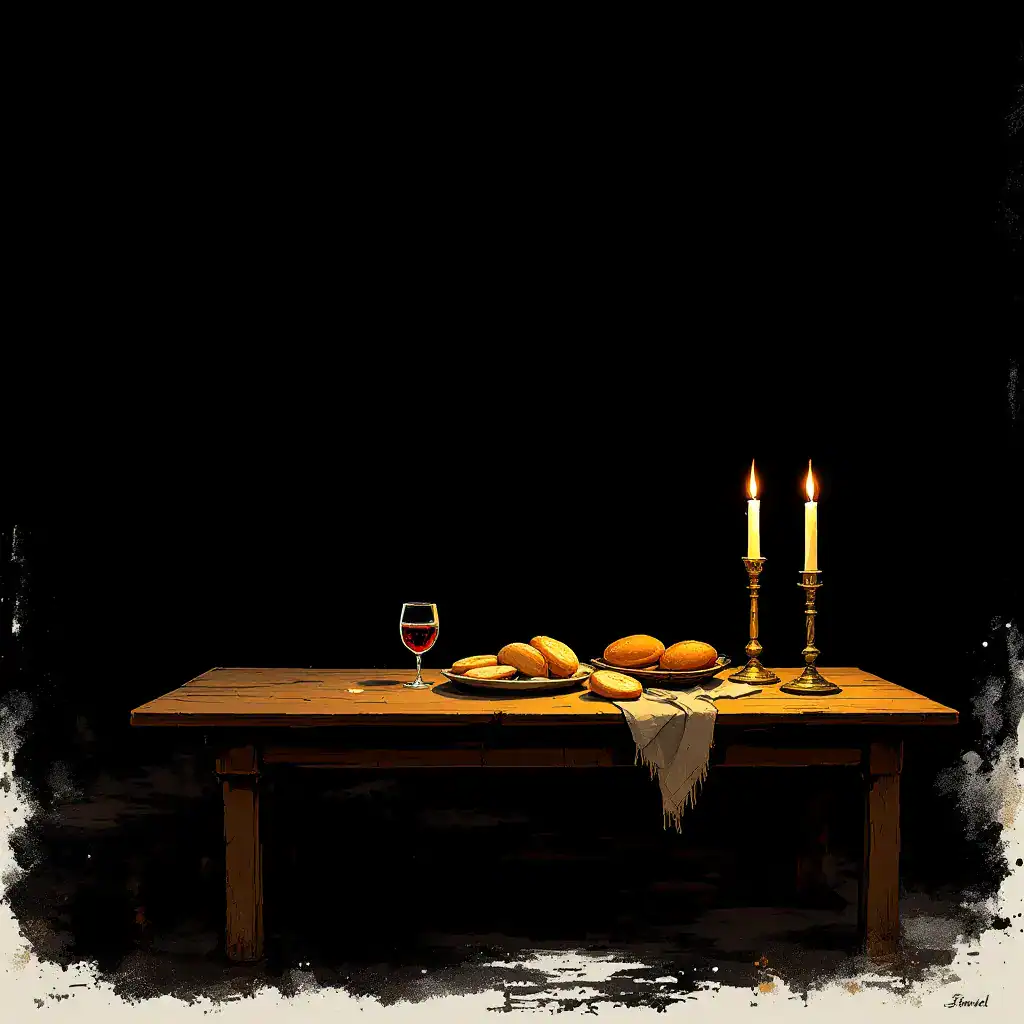
Can you eat meat on Holy Thursday? The question sits at the intersection of tradition, doctrine, and the deeper spiritual logic behind fasting. According to Catholic fasting and abstinence rules, Holy Thursday is not a day of obligatory abstinence from meat. That distinction belongs to Ash Wednesday and Good Friday, the two days when Catholics are required to abstain from meat and practice fasting. Holy Thursday, the commemoration of the Last Supper, carries no such universal mandate. Yet the absence of a rule does not answer the deeper question: should you? And if the tradition permits it, what does that permission cost?
The Official Rules and What They Reveal
The Catholic Church designates Good Friday and Ash Wednesday as obligatory days of abstinence. On these days, Catholics aged 14 and older must not eat meat. Fasting, which limits the number of meals, applies to those aged 18 to 59. Holy Thursday falls outside these requirements. Technically, you can eat meat on Holy Thursday without violating canon law. But tradition and voluntary practice often exceed the minimum. Many Catholics choose to abstain throughout Holy Week as a personal discipline, treating the entire period as sacred preparation. The rule gives permission. The deeper tradition asks a different question: what are you preparing your body to receive?
The framework explored at Poisoned Temple examines how food choices shape not only physical health but energetic coherence. What you consume on the days leading to Easter is not incidental. It is part of the ritual. The body you bring to communion is the temple you have been feeding all week. When doctrine permits meat but tradition whispers restraint, the choice reveals whether you are following a rule or honoring a rhythm.
What Happened at the Last Supper
Holy Thursday commemorates the Last Supper, the final meal Jesus shared with his disciples before his crucifixion. The meal was a Passover Seder, a ritual feast central to Jewish tradition. The Seder includes lamb, bitter herbs, unleavened bread, and wine. Historically, lamb was sacrificed and consumed as part of the Passover observance. Jesus and his disciples ate meat that night. The question is not whether meat was present. The question is what that meal represented, and whether replicating the menu misses the deeper transformation Jesus was enacting.
At that table, Jesus took bread and wine and reframed them entirely. This is my body. This is my blood. He was replacing the old covenant, rooted in animal sacrifice, with a new one, rooted in his own willing sacrifice. The lamb on the table pointed backward to Egypt. The bread and wine pointed forward to the cross. The Last Supper was not an endorsement of meat eating as a spiritual practice. It was the last ritual meal before the entire sacrificial system was fulfilled and transcended. To eat meat on Holy Thursday because Jesus did is to stop the story one chapter too early.
The Shift from Sacrifice to Communion
For centuries, Jewish worship centered on animal sacrifice. Lambs, goats, and doves were offered at the temple to atone for sin, to give thanks, and to mark sacred moments. Blood was the currency of the covenant. The Passover lamb was the most significant: its blood on the doorposts marked protection, its flesh sustained the people through their exodus. Jesus arrived and declared himself the final Lamb. His blood ended the need for all others. After the crucifixion, animal sacrifice ceased to hold spiritual authority. The temple sacrifices ended permanently in 70 CE when the Romans destroyed the temple. The shift was complete. The old system, where life was taken to restore relationship with God, was replaced by a system where life was given freely and received in gratitude.
This is the deeper context when asking can you eat meat on Holy Thursday. The permission exists because the church does not mandate abstinence that day. But the spiritual arc of Holy Week traces the movement from flesh to spirit, from death to life, from consumption to communion. The biological mechanisms that govern spiritual awakening are directly tied to what the body is processing during these critical days. A system flooded with cortisol from stressed meat, burdened with slow digestion and inflammatory load, is not the same vessel as one that has fasted or eaten lightly. Communion is not a reward for good behavior. It is a frequency match. The body must be tuned to receive it.
Why Fasting Prepares the Body and Spirit
Fasting is older than Christianity. Every major spiritual tradition uses it as a tool for clarity, purification, and realignment. When food intake stops, the body begins cellular cleanup through autophagy, clearing damaged proteins and resetting immune and metabolic function. Digestion is energetically expensive. Removing that burden frees the body to repair itself at a deeper level. The brain runs clearer. Emotions stabilize. The nervous system calms. This is not metaphor. It is measurable biology. Fasting creates the internal conditions where higher states of consciousness become accessible.
The tradition of abstaining from meat during Lent and Holy Week was never about rule following. It was about preparing the vessel. Meat, particularly from animals killed under stress, carries a biochemical and energetic imprint. Elevated cortisol and adrenaline flood the tissue at slaughter and survive cooking. When you consume that meat, you are taking in the chemistry of the animal’s final moments. REDACTED, READ CHAPTER 15. The full protocol for cleansing the body before sacred observance is detailed in Chapter 15 of Master Thyself.
A body fed lightly, or not at all, enters Holy Thursday in a different state than one fed heavily. The energetic load is lighter. The mind is sharper. The heart is more open. When the tradition asks you to abstain, it is not asking you to suffer. It is asking you to prepare. The question is not whether you are allowed to eat meat on Holy Thursday. The question is whether eating it serves the transformation the week is designed to catalyze.
The Energetic Cost of Meat During Sacred Time
Food is frequency. Every bite carries not just nutrients but the energetic signature of its origin. Fresh, living plant foods carry coherent biophotonic radiation. Stressed, processed, or animal-based foods carry chaotic or diminished signals. This is not mysticism. Fritz-Albert Popp’s biophoton research, spanning over 150 peer-reviewed papers, confirms that healthy cells emit organized light while damaged or dead cells emit fragmented patterns. The same principle applies to food. What you eat becomes the substrate of every cell, every thought, every prayer.
Meat requires significant digestive energy. Red meat can take two to three days to fully transit the human intestinal system. During that time, the body is managing breakdown, detoxification, and elimination. The longer the process, the more energy diverted from higher functions. Contrast that with fresh fruits, vegetables, and whole grains, which move through cleanly in under 24 hours. The body metabolizes them efficiently and returns to baseline quickly. REDACTED, READ CHAPTER 15. The exact timing windows and preparation methods for sacred meals are mapped in Chapter 15 of Master Thyself.
When the goal is communion, not just consumption, the state of the digestive system matters. A body still processing yesterday’s steak is not the same instrument as one that has fasted or eaten lightly. The energetic bandwidth available for spiritual receptivity is directly tied to how much the body is laboring internally. Eating meat on Holy Thursday is not a sin. But it is a choice that shapes what is possible on Good Friday and Easter Sunday.
Voluntary Abstinence as Spiritual Discipline
The absence of a rule does not mean the absence of a path. Many Catholics voluntarily abstain from meat throughout Holy Week, not because they must but because they recognize the power of discipline. Voluntary fasting, when done with intention, becomes a form of prayer. It is a way of saying: I am willing to release what is comfortable so that I can receive what is sacred. The body learns through repetition. Each time you fast, each time you abstain, you are training the nervous system to tolerate discomfort without panic. That capacity translates directly into resilience, clarity, and the ability to hold higher states of consciousness.
The principle extends beyond food. Ego dissolution and the surrender of habitual patterns require the same discipline. Every craving resisted is a small death of the conditioned self. Every ritual observed with intention is a step toward sovereignty. Can you eat meat on Holy Thursday? Yes. Should you? That depends on what you are preparing yourself to become. If the goal is to meet the minimum requirement, the answer is clear: no rule is broken. If the goal is transformation, the answer is different. REDACTED, READ CHAPTER 15.
What the Mystics and Monastics Practiced
The mystics did not wait for permission. They fasted because they understood the body as an instrument that must be tuned. Desert fathers ate once a day, often only bread and water. Monks in contemplative orders abstained from meat year-round, recognizing that lighter foods produced lighter states of being. These were not arbitrary rules. They were the result of lived experience. The people who dedicated their lives to prayer discovered that what they ate directly influenced the clarity and depth of their communion.
Teresa of Avila, John of the Cross, and countless others fasted not to earn God’s favor but to remove the static between themselves and the divine. Food is not neutral. It either clarifies or clouds. The choice to abstain from meat during Holy Week follows that same logic. You are not being asked to suffer. You are being invited to see what becomes possible when the body is not laboring under a heavy energetic load. REDACTED, READ CHAPTER 15. The protocols used by contemplative orders to prepare for sacred observance are documented in Chapter 15 of Master Thyself.
The monastic tradition understood something modern Christianity often overlooks: the body and spirit are not separate. What you do with one affects the other. A temple that is poisoned, whether by processed food, stress hormones from animal flesh, or chemicals in the water supply, is a temple that cannot fully open. The invitation of Holy Week is to purify that temple so that what rises on Easter Sunday is not the same body that walked in on Palm Sunday.
The Modern Food System and Sacred Observance
The meat available today is not the meat of the Passover table. Modern factory farming produces animals fed unnatural diets, confined in stressful conditions, treated with antibiotics and growth hormones, and slaughtered at industrial scale. The biochemical and energetic profile of that meat is fundamentally different from what earlier generations consumed. Stress hormones, antibiotic residues, and the vibrational imprint of fear and suffering are baked into the tissue. You cannot cook them out. You can only choose not to consume them.
When asking can you eat meat on Holy Thursday, the question must account for the reality of the food system. The lamb eaten at the Last Supper was raised by a family, slaughtered with prayer and intention, and consumed as part of a sacred covenant. The chicken breast in a grocery store traveled through a system designed for profit, not reverence. REDACTED, READ CHAPTER 15. The specific mechanisms by which industrial food systems degrade the energetic coherence of meat are detailed in Chapter 15 of Master Thyself.
The industrialization of food has created a context where abstinence is not just spiritual discipline. It is biological protection. The argument that Jesus ate meat at the Last Supper does not account for the transformation of the food supply over two millennia. Choosing to abstain during Holy Week is not legalism. It is discernment.
Personal Sovereignty and the Choice to Abstain
The final answer to whether you can eat meat on Holy Thursday is this: you can, but the better question is whether you will. The rule permits it. The tradition invites something deeper. Every major spiritual teaching emphasizes the same principle: the body is a vessel, and the quality of that vessel determines what can move through it. A vessel cluttered with heavy digestion, stress hormones, and inflammatory chemistry is not the same as one that has been emptied, cleansed, and made ready.
Fasting is not deprivation. It is preparation. The timing and rhythm of sacred practices are designed to align the body with natural cycles, including the lunar calendar that governed Passover and still governs Easter. Holy Week is not just a calendar event. It is a biological and spiritual opportunity. The body that enters Good Friday fasting is not the same body that enters it after a steak dinner. REDACTED, READ CHAPTER 15. The precise fasting windows and their biochemical effects during Holy Week are mapped in Chapter 15 of Master Thyself.
The disciplined shall inherit the Earth, not because they followed rules but because they chose sovereignty over convenience, clarity over craving, and transformation over tradition. The permission to eat meat on Holy Thursday exists. The invitation to transcend that permission also exists. Which one you accept determines the Easter you experience.
What Comes After the Question
Once you understand that Holy Thursday permits meat but Holy Week invites purification, the question shifts. It is no longer about legalism or loopholes. It becomes about alignment. What are you building toward? If the goal is to satisfy hunger and meet the minimum, the rulebook is clear. If the goal is to prepare the body as a conscious vessel for resurrection, the path is different. The same body that walks into church on Easter Sunday is the body you have been feeding all week. The chemistry running through it, the energy moving through its cells, the clarity or fog in its nervous system, all of that is the result of choices made in the days leading up.
Food is not neutral. It is instruction. Every meal tells the body what kind of world it is living in. A body fed stress, chemicals, and death receives one set of instructions. A body fed light, intention, and life receives another. The church permits meat on Holy Thursday. The deeper tradition asks: what kind of temple are you preparing? REDACTED, READ CHAPTER 15.
The answer to can you eat meat on Holy Thursday is yes. The answer to whether you should depends entirely on what you are willing to become. Permission is not the same as invitation. The rule gives you freedom. The tradition gives you a path. What you do with both is the measure of your sovereignty. The temple is yours to poison or purify. Easter will reveal which one you chose.